Galerie Droste
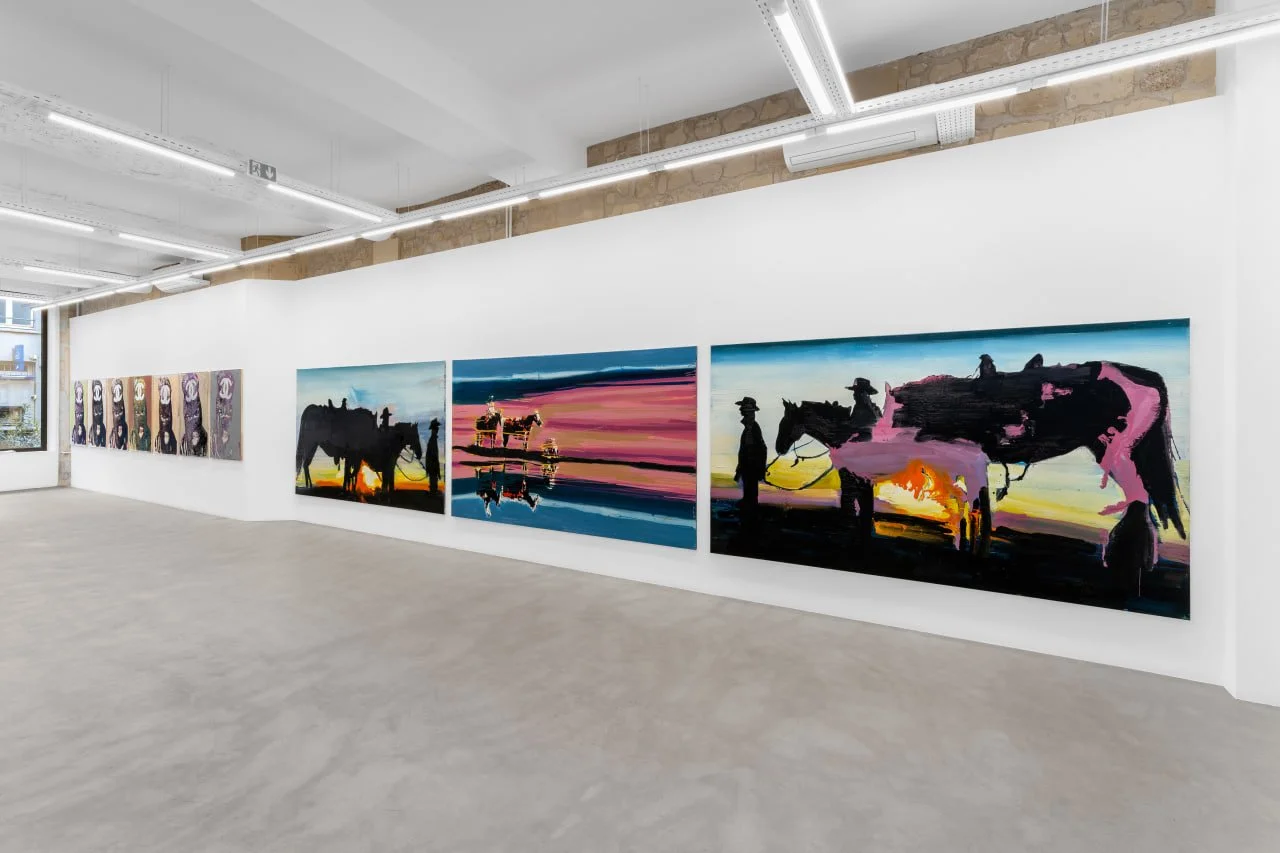
Galerie Droste, based in Düsseldorf, Paris and Berlin, is a dynamic contemporary art gallery committed to several concerns: since 2016 it consolidates the positions of artists on the international contemporary art scene, mostly figurative, whose main practices are painting, drawing and sculpture. It reaffirms its place in the market by daring expressive artists postures that predominantly challenge the paradigms of European art history, as well as questioning its conventional view of art. Within the young gallery scene, Galerie Droste promotes a collaborative approach to create stimulating synergies and friendly exchange. Thus, Galerie Droste also joins the ranks of institutions that do not want to turn their gaze away from social change and the challenges it brings: it strives to cultivate togetherness, promote responsible practices, highlight diverse cultural-social currents, and especially support young artists on the international contemporary scene, while always maintaining its clear, Franco-German corporate identity.
Galerie Droste is a member of the New Art Dealers’ Alliance (NADA) & the Professional Committee of Art Galleries (CPGA).
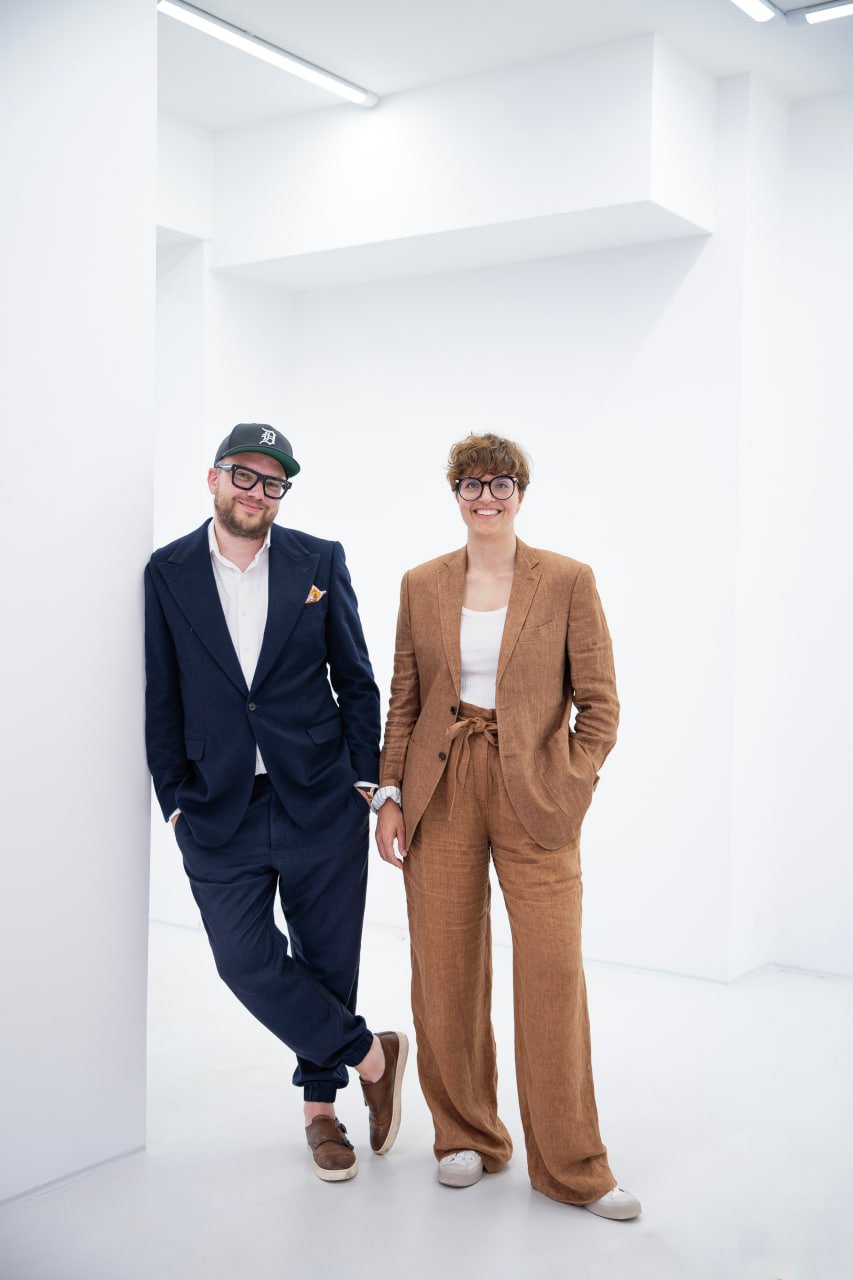
Patrick Droste and Katharina Gallade, founders of Galerie DrosteHow did Galerie Droste begin? Could you tell us more about the story behind its founding and how the gallery’s vision has evolved since its early days?
We started in 2014 with a small project space in a small town in Germany. At the time, none of us realized that it would ever become a real gallery, especially one that could compete internationally and provide us with a full-time income. Back then, we were both still more involved in the urban art scene and mainly exhibited internationally renowned graffiti artists. This brought us a lot of attention, and we realized that it wasn't just a crazy idea but had substance. So, we simply carried on, learned from our mistakes, professionalized ourselves and set goals. Above all, we enjoyed what we were doing and to this day we are more than happy to have put the effort and love into the gallery.
Galerie Droste operates between Düsseldorf, Paris, and Berlin, three distinct cultural environments. How do these cities individually influence your curatorial vision and the gallery’s overall identity?
Basically, we have to say that from a European perspective, especially at the beginning of the gallery, we ran a rather non-European program. We were strongly influenced by the West Coast of America, as we both came from the street and hip-hop scene and were exposed to the subcultural art scene there at an early age. This shaped our perspective, and so we have always focused on very expressive painting, which was perhaps less common in cities like Paris and Düsseldorf. But it's absolutely true that Düsseldorf, with its academy, and Paris, with its own huge art scene and art history, have refined the program. However, we keep our eyes open everywhere and try not to please the cities, but to stay true to our own feelings and thereby perhaps show the local people something new. Sometimes that works well and sometimes it doesn't.
Your program often focuses on figurative artists who challenge the paradigms of European art history. What does “challenging” mean to you in today’s contemporary art context?
All we can say is that, especially with the figurative, expressive, very direct painting of younger artists, before their boom during the coronavirus pandemic, we definitely had a completely different program than all our colleagues in Düsseldorf and Paris. Especially with our American positions. For most visitors, they were too expressive, too kitschy, too unfinished, too raw, too romantic, too explicit, too ugly. Whatever you want to call it. It is only in recent years, and above all due to the strong digitalization of the art market, that this has changed. Our eyes have also become globalized; we are exposed to much more from other cultures and art scenes, and so our viewing habits are adapting. Although we still notice that, for example, the works of our German artists alone are perceived very differently in France and are initially something new. And vice versa.
The gallery positions itself as both commercial and conceptual, balancing the art market with intellectual depth. How do you maintain this balance between market demands and curatorial integrity?
It is certainly a different challenge for every gallery. Perhaps what intellectual depth means is also a different question for everyone. Since we are primarily at home in painting and sculpture, it is rather rare for us to work with performance artists or video artists. These are certainly arts that are considered intellectually demanding, but they are not necessarily easy to sell. In general, our program is certainly more straightforward than others. So, for us, intellectual depth means above all that artists are knowledgeable about art history and can reference it, while still making their own perspective clearly understandable. They must create a universe that is entirely their own, without negating art history, because the wheel is never reinvented. This should be a basic requirement for any artist who wants to be successful institutionally, but also on the market. For us, it is not a question of either/or, but rather of the two going hand in hand. After all, collectors are usually even better art historians and notice immediately when depth is lacking.
Galerie Droste emphasizes togetherness and responsible practices. In what ways does this commitment translate into your daily work with artists, collectors, and institutions?
First and foremost, we see ourselves as a team. This means that we work closely with the artists we represent, treating them with respect and as equals. The same applies to our employees. We value their opinions, ideas and comments. We also try to take collectors on a journey with us, characterized by exchange, transparency and fairness.
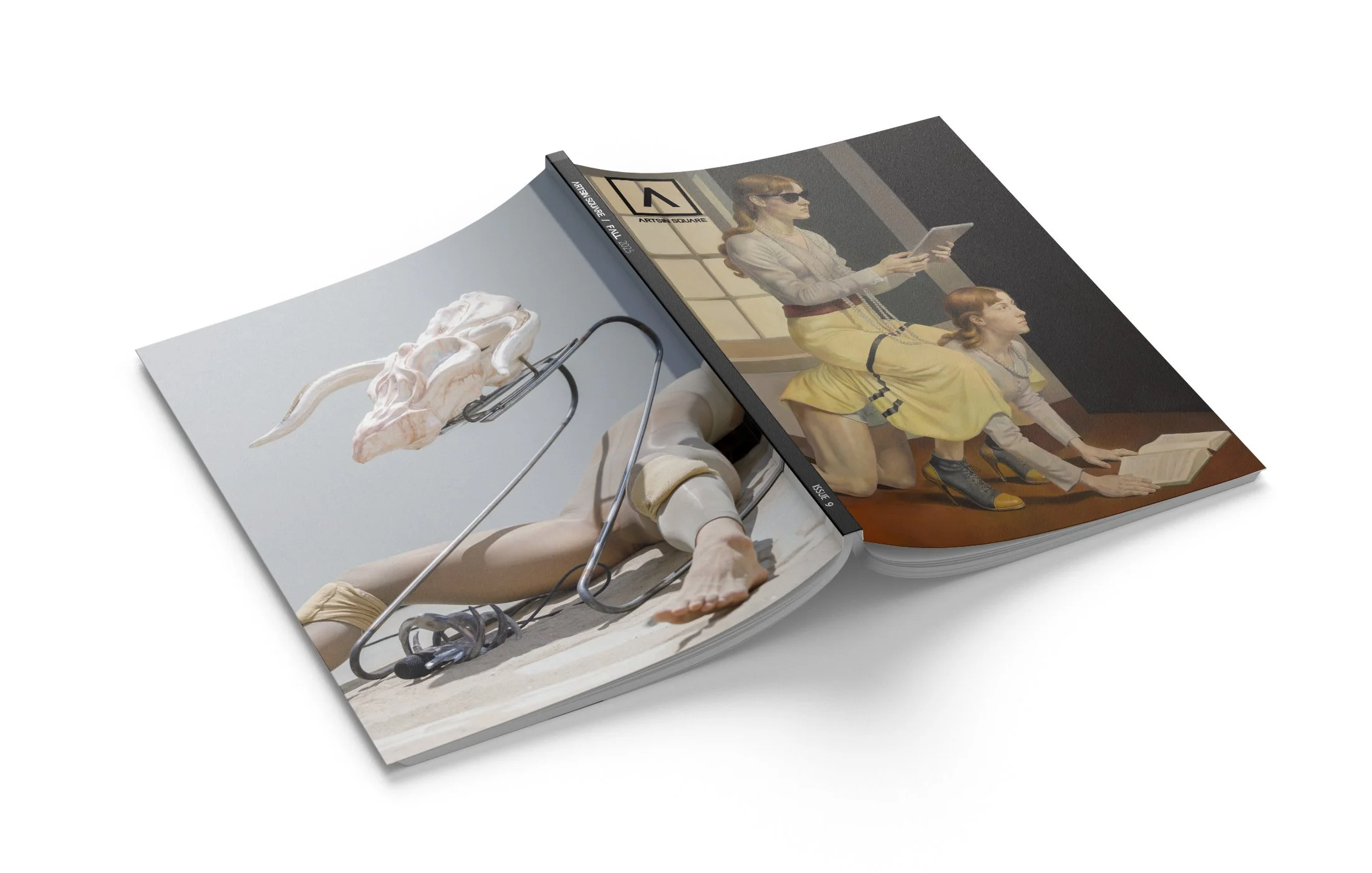
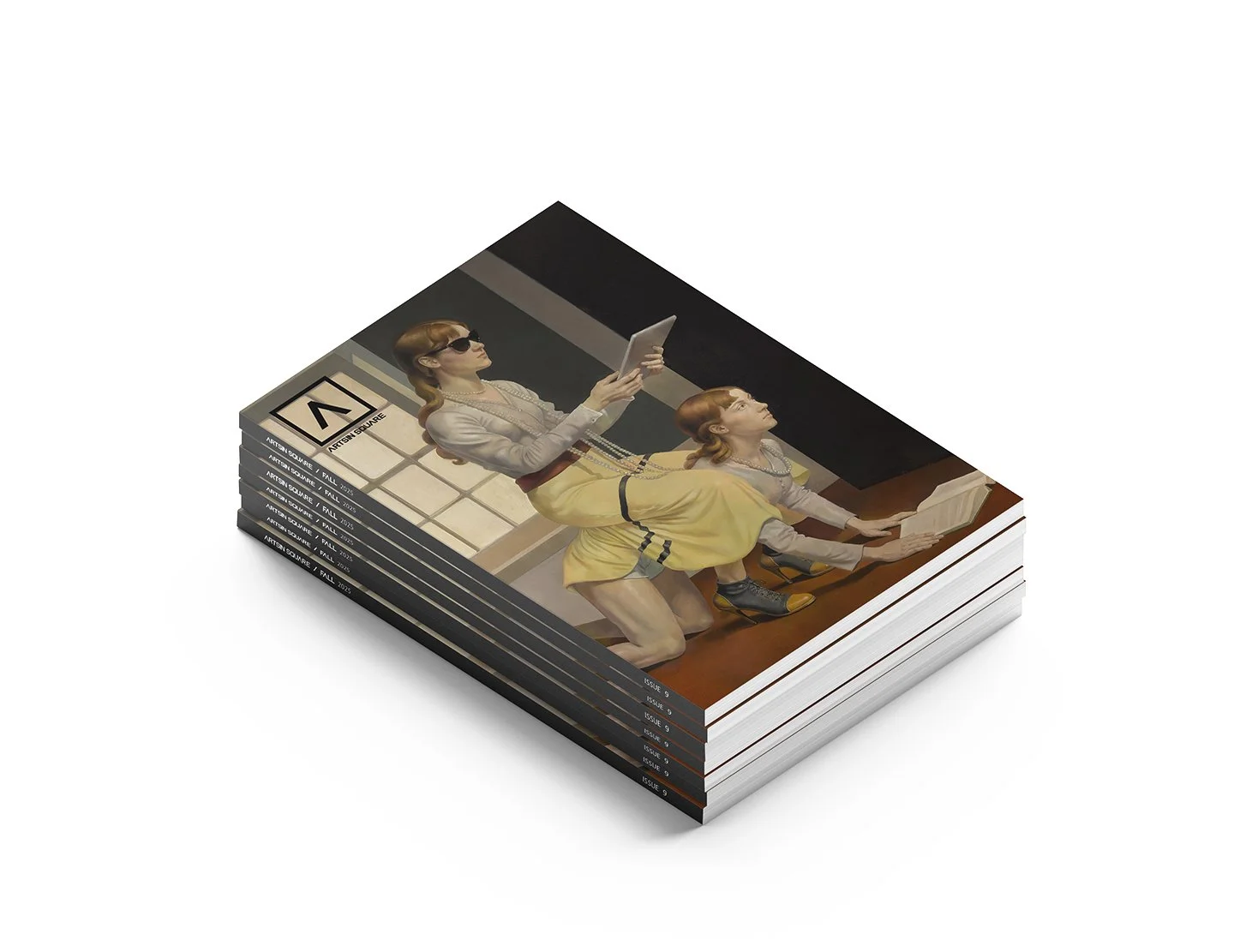
Galerie Droste was the guest curator for Issue 9 of ArtsinSquare Magazine. All works in this issue were selected by them, and their interview is also included. Learn more.
Many of your represented artists explore expressive and emotional figuration. What draws you to this particular sensibility, and how does it resonate with contemporary audiences?
I think it has to do with our past, where we come from. Urban art, but also American art of the 70s and 80s, was characterized by figuration, expressiveness and clear messages. Pop art, street art, Mission School – all the themes that fascinated us in our youth also shaped our viewing habits. It's not at all that we aren't interested in other artistic genres; we also collect many artists with completely different artistic orientations and are interested in all what the artworld has to offer. However, it's true that our hearts keep drawing us back to figuration. Perhaps this is because it's what we know best and where we feel most at home. As already described, with this we have struck a chord in recent years, even if the hype has subsided. Which we think is a good thing. Because now everyone is focusing more on the quality and stability of an artist and not on the number of followers. No hype lasts forever, but art does. So, a new era has dawned, and we will see what the fast-paced world and art scene will put on a pedestal next.
You mention the gallery’s goal to “cultivate synergies and friendly exchange.” Can you describe a collaboration or dialogue that truly embodied this philosophy?
We always strive to create synergies with our colleagues. Whether its shared exhibition stands on fairs, help with transport, finding premises, assistance with tax issues, etc. Or even supporting our artists' external projects or our collectors, whom we send to befriended gallery owners, recommending other artists who are not in our program. We certainly have a few examples of friendly exchanges, especially in the day-to-day running of the gallery, which are not visible but take place on a daily basis. We always try to stay in touch and work with each other rather than against each other. Also, we try to participate in young, small, new fairs, such as the CAN ART FAIR or STAGE in Bregenz, to support the people who put a lot of love into these projects and also try to do things differently for the galleries and the younger art community. We all need each other, and no matter how economic this branch is, it is always locally oriented towards the community to participate and enjoy culture.
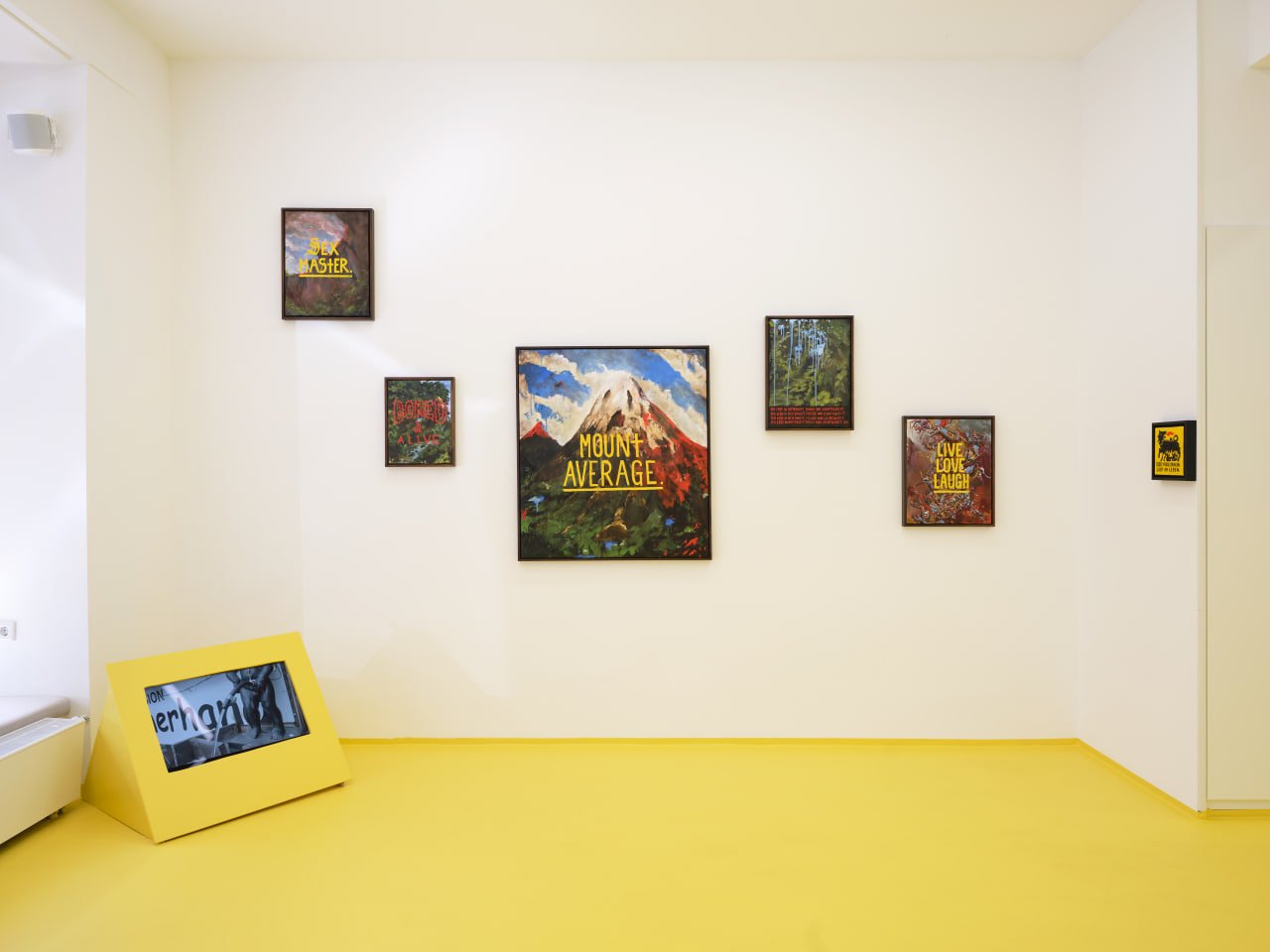
The text of your mission refers to social change and the challenges it brings. What social transformations do you feel are most urgent for the art world to engage with today?
We all know that times have become difficult, both socially and economically. With the rise of the right-wing scene, it is our duty to preserve artistic freedom, uphold diversity, and raise awareness of socially relevant issues. This applies not only to artistic programs, but also to everyday life. The entire art scene is still dominated by old white men who still act as gatekeepers in important museums and institutions and thus hold the reins of power. This must change. Above all, the institutional art world must become more open, younger, and more diverse. They are the ones who dictate to most of the world what art should be, what art can and should achieve. And above all, what art means for our world right now. When just one of many examples, the Louis Vuitton Foundation in Paris, an institution with so much money behind it and queues of people in front of the entrance, shows yet another exhibition by a male painter prince of the 80s and 90s or of modernism, we see this as a problem. This simply fails to fulfil the cultural educational mandate in times when clear signs of a strong and divers democracy need to be set.
You often support young international artists early in their careers. What qualities do you look for when deciding to represent or collaborate with an artist?
As described above, in addition to the painterly quality, it is above all an artistic world that must open up to us, and one that is entirely its own. It is always important to feel that the artist is constantly starting over in his mind and constantly working out something new. That the impulse to create comes from within, that it is an inner pulsation that never dries up and is never done just to please the outside world. Whether this then leads to a long-term and close collaboration depends largely on factors such as a person's character, professionalism, and a shared understanding of the collaboration between gallery and artist.
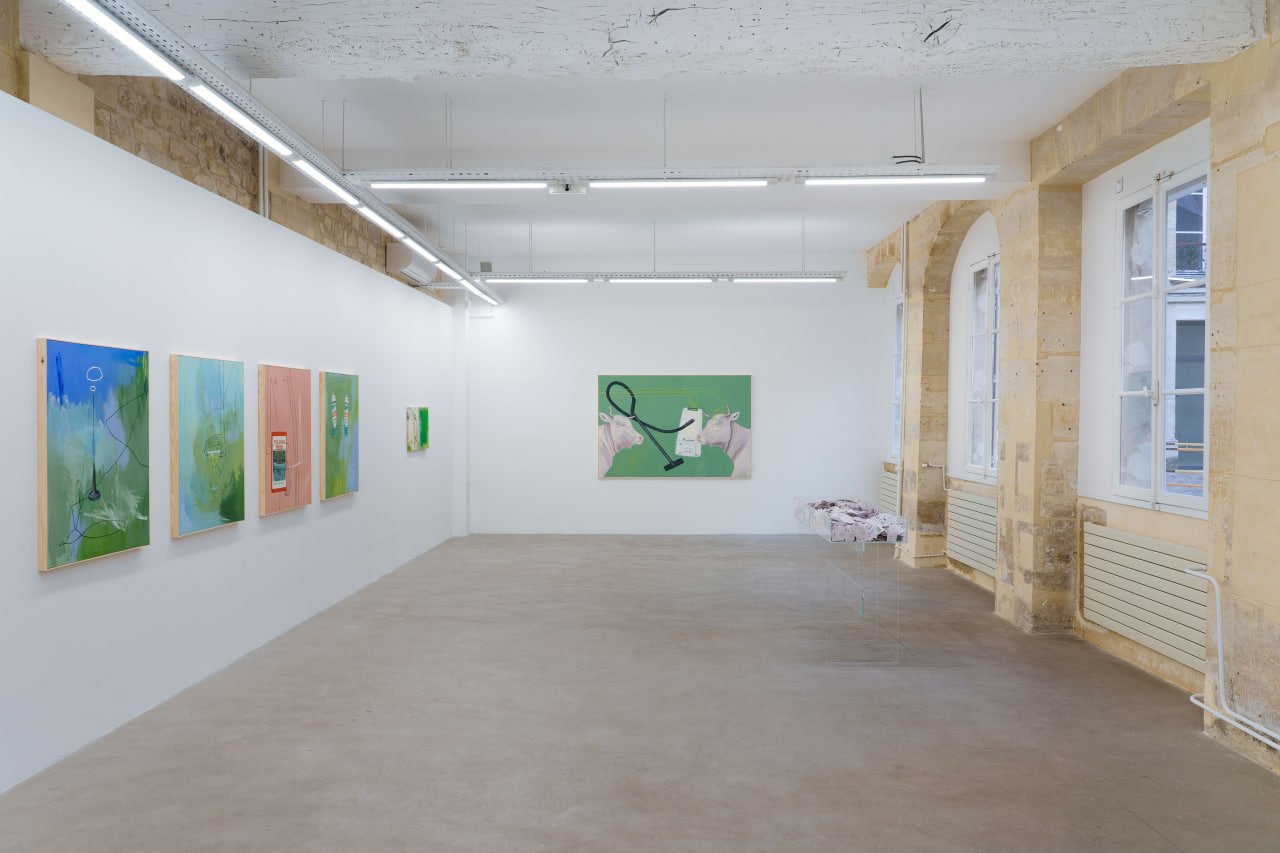
Galerie Droste’s projects often challenge notions of beauty, tension, and imperfection. Do you see these as aesthetic choices, or more as ethical and political gestures?
We don't think any of that. We believe we simply do what we do and follow our gut feeling. We are aware that this means we don't always strike the right note, but we never wanted to be pigeonholed or do/show what is expected of us. In a way, we are of course bound by the unwritten laws of the art market, but we always try to remain true to ourselves and think outside the box.
Community and collectivity appear central to your practice. How do you imagine the role of a gallery evolving in the next decade, beyond the white cube model?
One could write an entire book about this, but the most important thing is that galleries are once again becoming places of exchange. Whether for the community, as the Harlesden High Street Gallery in London is currently doing sensationally, for the education of children and young people, or simply for art lovers who want to spend more time in a gallery beyond readings or traditional openings, thus enjoying culture. A gallery should therefore become more flexible and democratic at its core.
Finally, what does success mean for Galerie Droste, is it measured through market recognition, cultural impact, or something more intangible?
Success is always a mixture of everything. Of course, as with everything else, without money there can be no gallery. That means success always also means economic success. In our business, that in turn means that an artist captures the spirit of the times, demonstrates quality, and is appreciated by collectors. If this also attracts the attention of institutions to the artist, giving him or her recognition on a broader level, so much the better. So, above all, success for us means that our artists are successful and that we can contribute to consolidating their position in the art market.
What advice would you give to younger artists who are just beginning to define their own voices within the contemporary art landscape?
Look around, observe what is happening, view a lot of art. The more you see and experience, the more your own voice will solidify. Stay true to that voice, follow your gut feeling, but always engage in dialogue and seek out experienced mentors who are allowed to question your work and challenge you. And as a great artist once said to us: Your studio is your workspace, where you constantly explore yourself and your art. Don't get too comfortable in there!
What advice would you offer to the younger generation who aspire to open and run a gallery of their own in the future?
That's always difficult, because above all we would like to see many more young galleries opening their doors, giving even more artists a public platform and allowing the cultural scene to grow and flourish. But despite all the romantic idea about being a gallerist, a gallery is above all a commercial enterprise. That means you must be able to generate money, be familiar with taxes, accounting, economics in general, customs, and logistics, and enjoy doing so. And, of course, you work in a world between two extremes—the art scene and the bubble that buys art. On both sides, personalities can be extreme, and the discrepancy can be huge. This is incredibly exciting and enriching, but it also must be balanced and endured. So, you should have a knack for people and an interest in people in general, as well as enjoy interacting with them. But when you, the next colleague of us, read this: Stay naive and just do it! We are happy to welcome you in this crazy world of art!