Von Wolfe
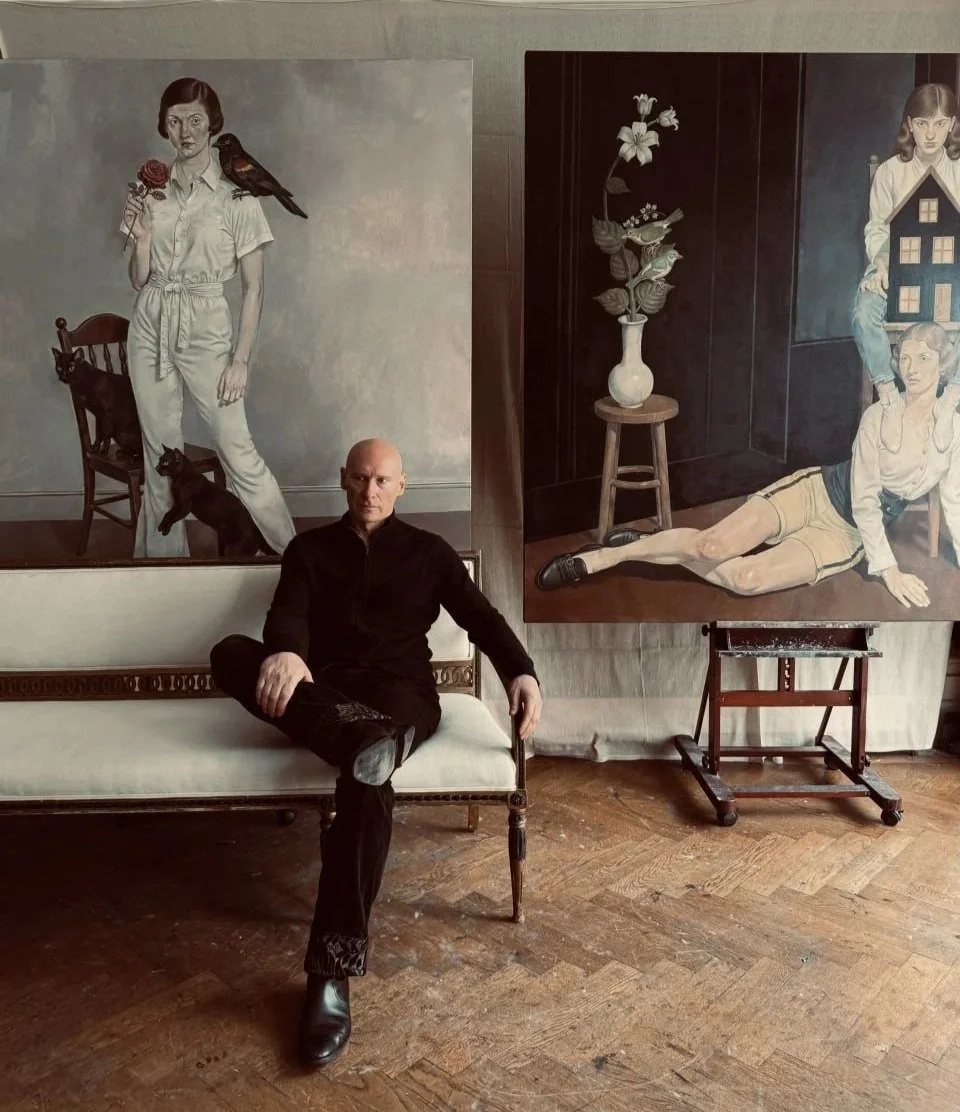
Von Wolfe is a British artist of German and Polish descent. He studied Philosophy at York University and currently lives and works in London. Von Wolfe’s process embodies the seamless interplay between the artist’s practice
as an oil painter and the forefront of technological innovation. Striking a balance between intuitive human discernment and a cutting-edge node-based system using diffusion models, the resulting works showcase astounding precision.
The artist navigates the boundary between digital and tactile realms. Through a process of adaptation and reinterpretation, he takes meticulously curated artworks, neither privileging the digital over the canvas nor vice versa, skilfully rendering them in oil, ensuring each medium stands in its own right, yet is harmoniously interconnected.
Achieving international recognition, his artwork has been showcased in esteemed art institutions globally. These include Musée Quai Branly, Paris, Helsinki’s Ateneum Museum, Stockholm’s National Museum and the Palais des Beaux-Arts de Lille..
Von Wolfe studio 2025, photo credit Nick Knight Hi Von, tell us about your background. How and when did you first start to paint?
I was born into an artistic family, so from a young age I was surrounded by art, books and ideas. My father had an enormous library containing tens of thousands of volumes on visual culture, literature and philosophy, which shaped the way I see and think. I began painting as a teenager and continued throughout my philosophy degree.
How do you begin to work? What is your process like?
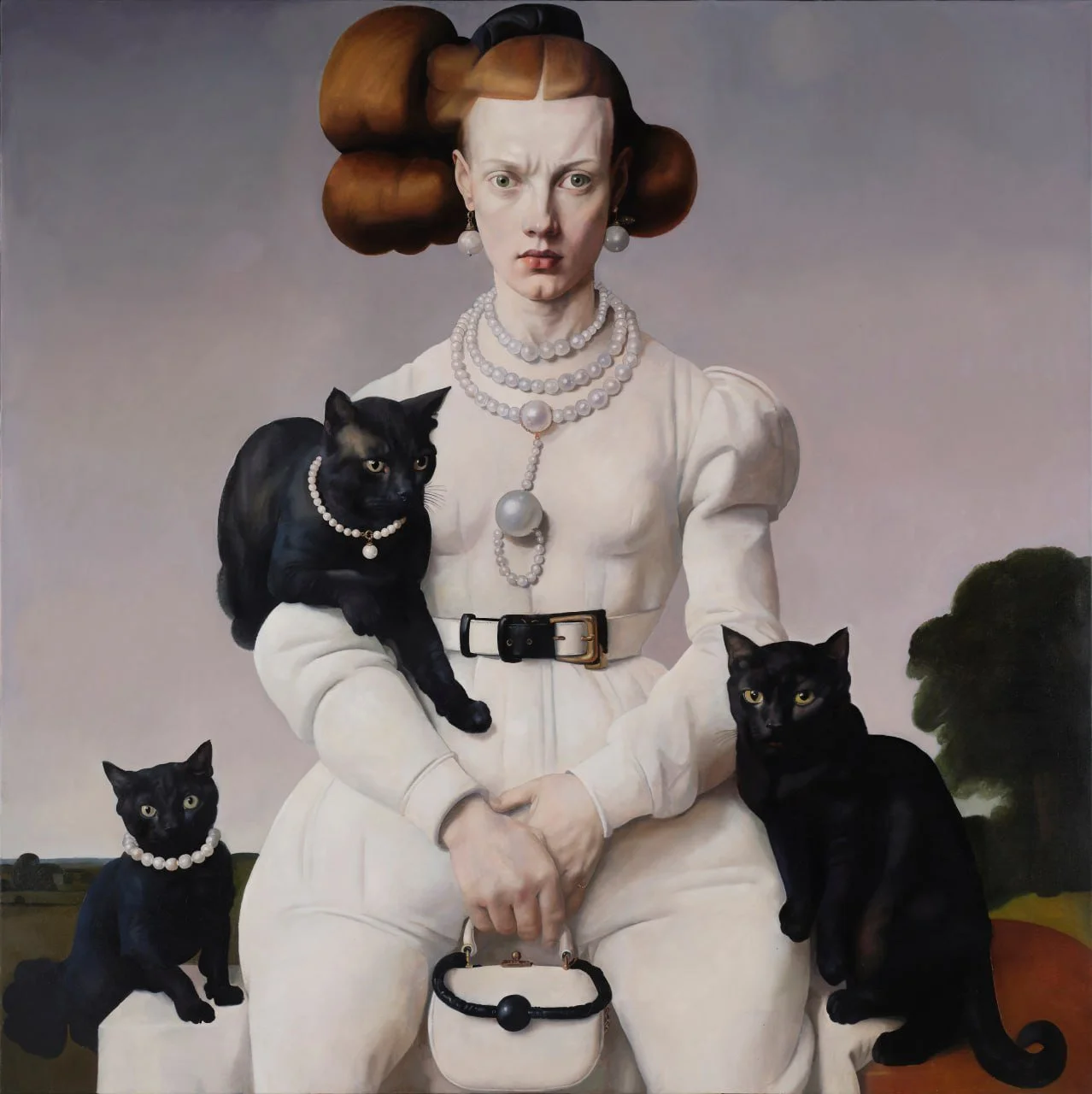
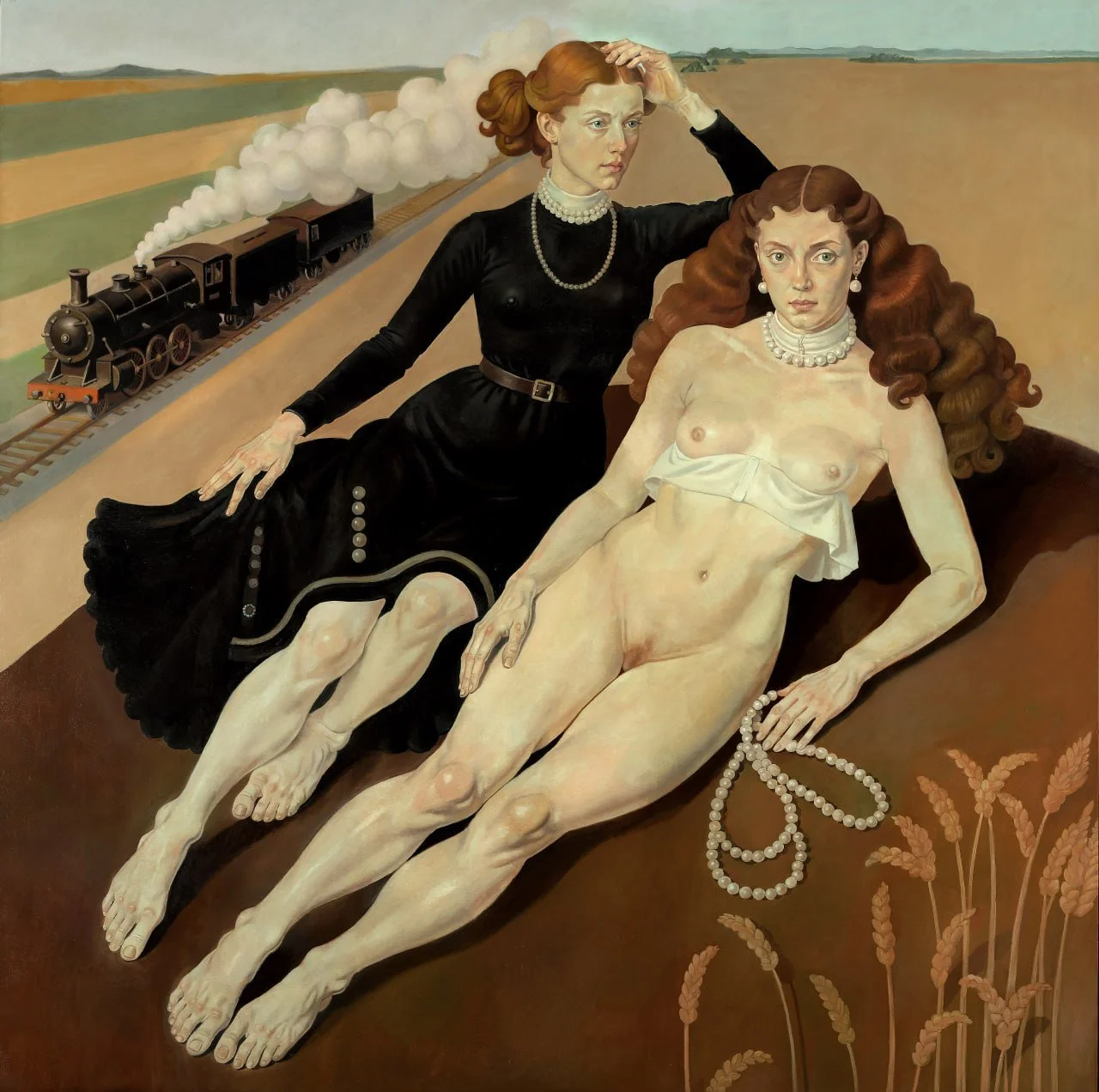
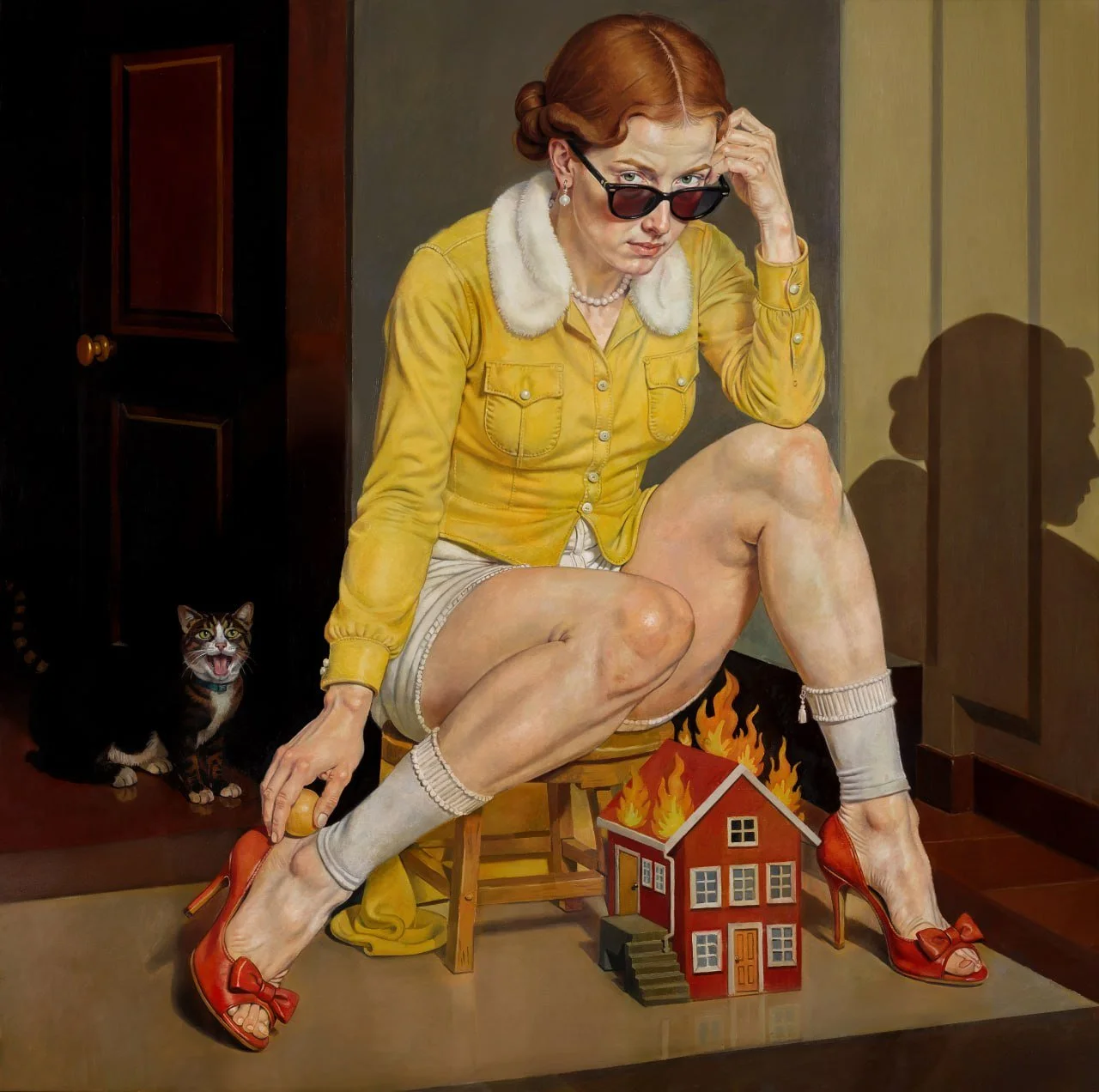
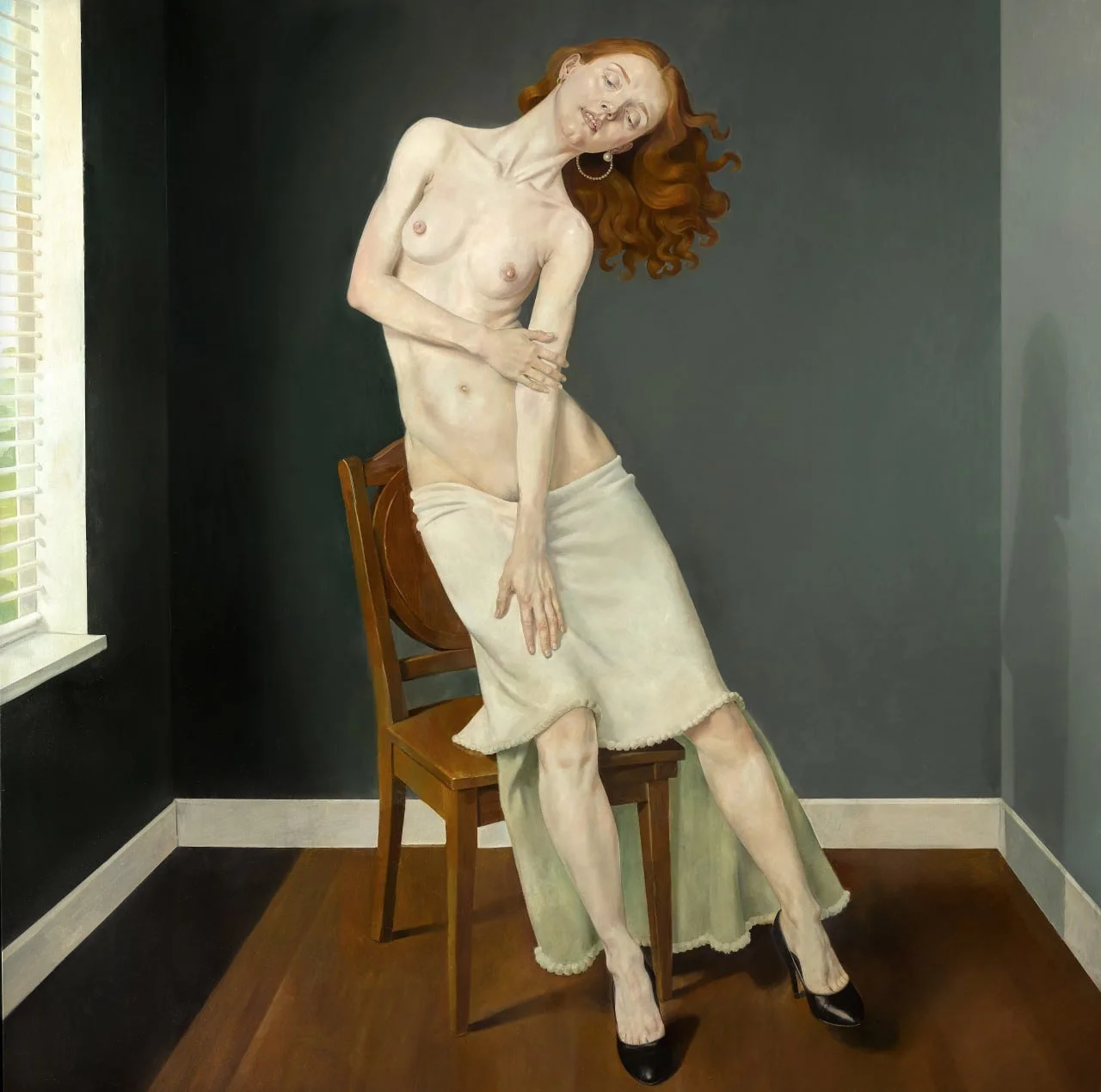
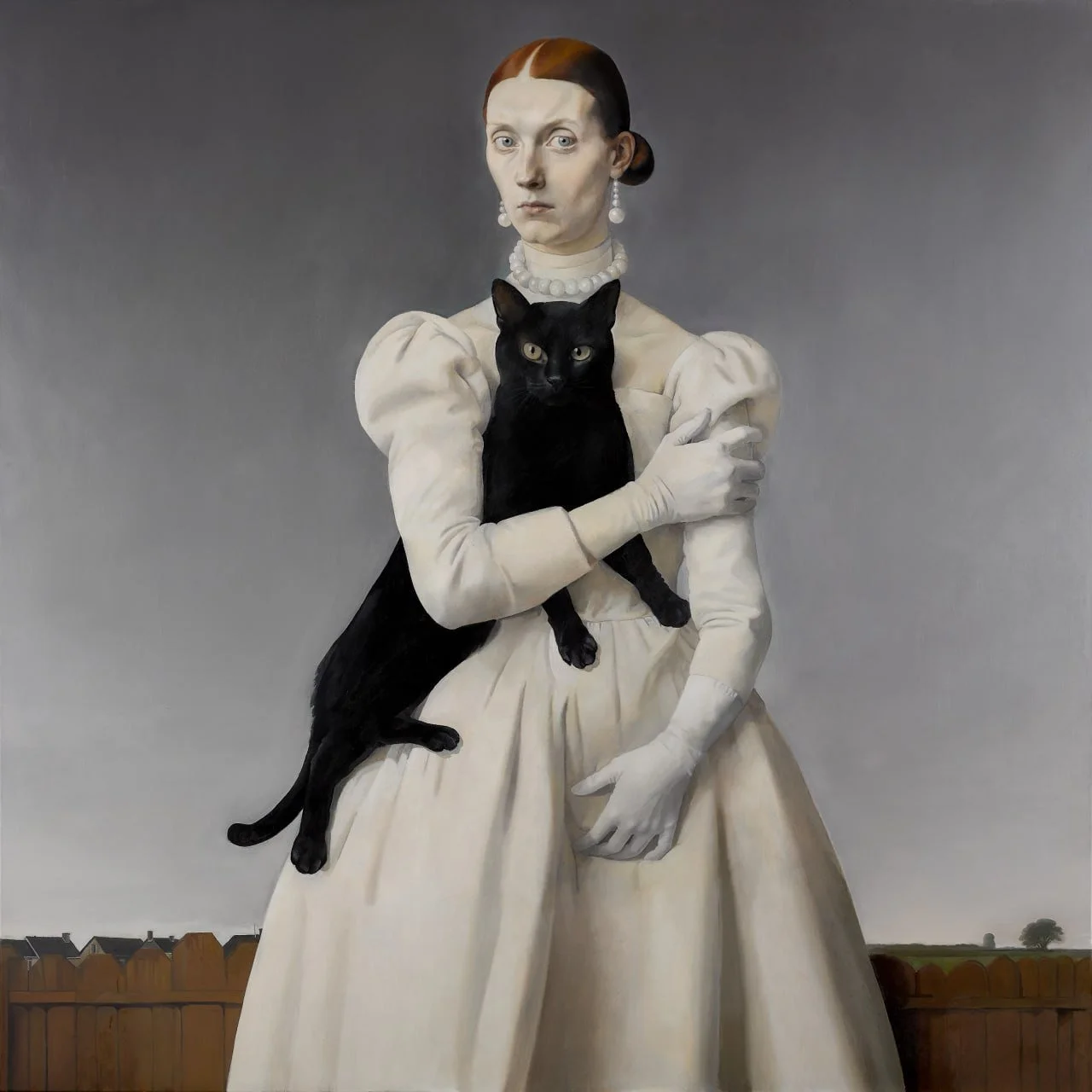
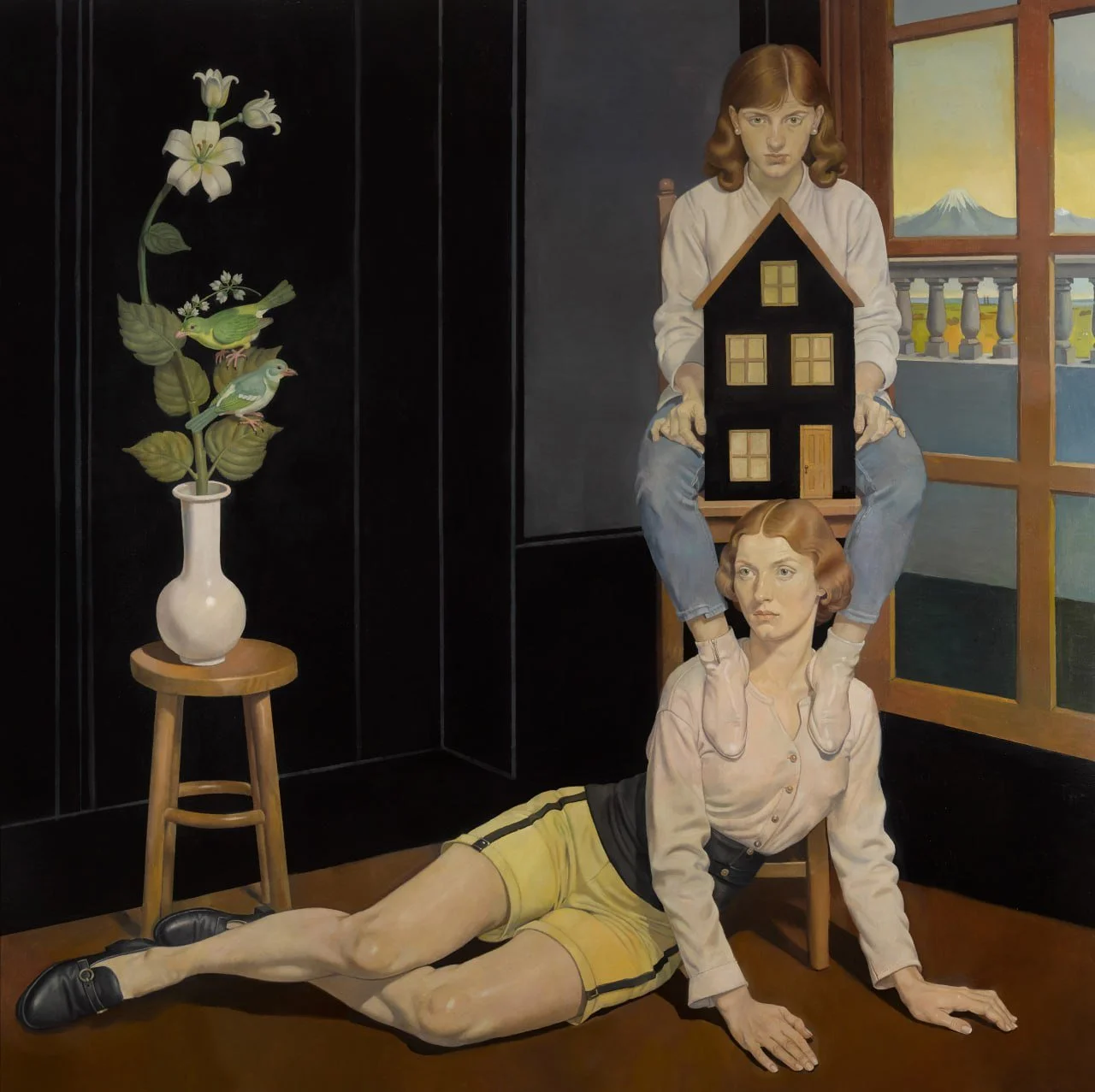
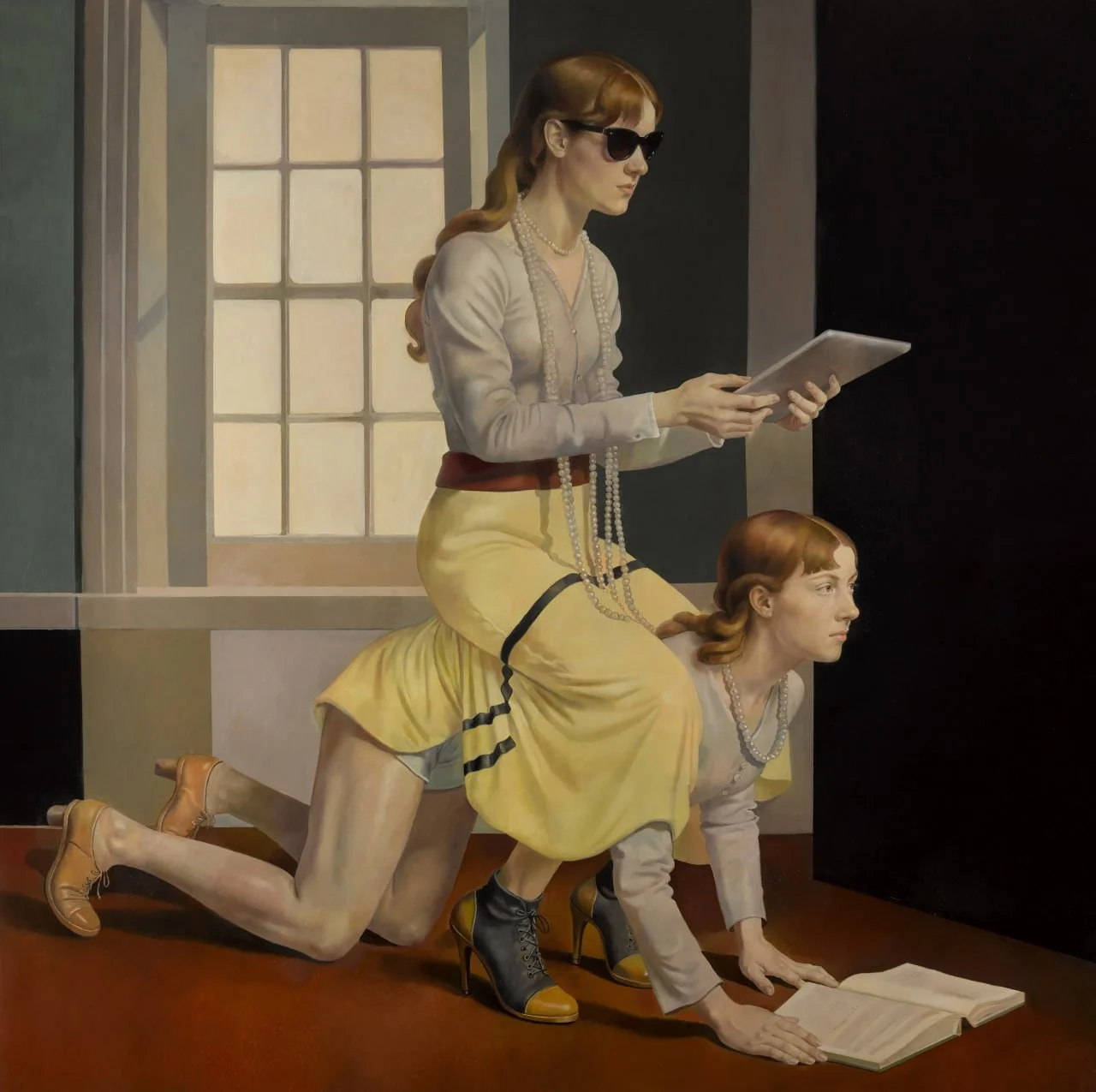
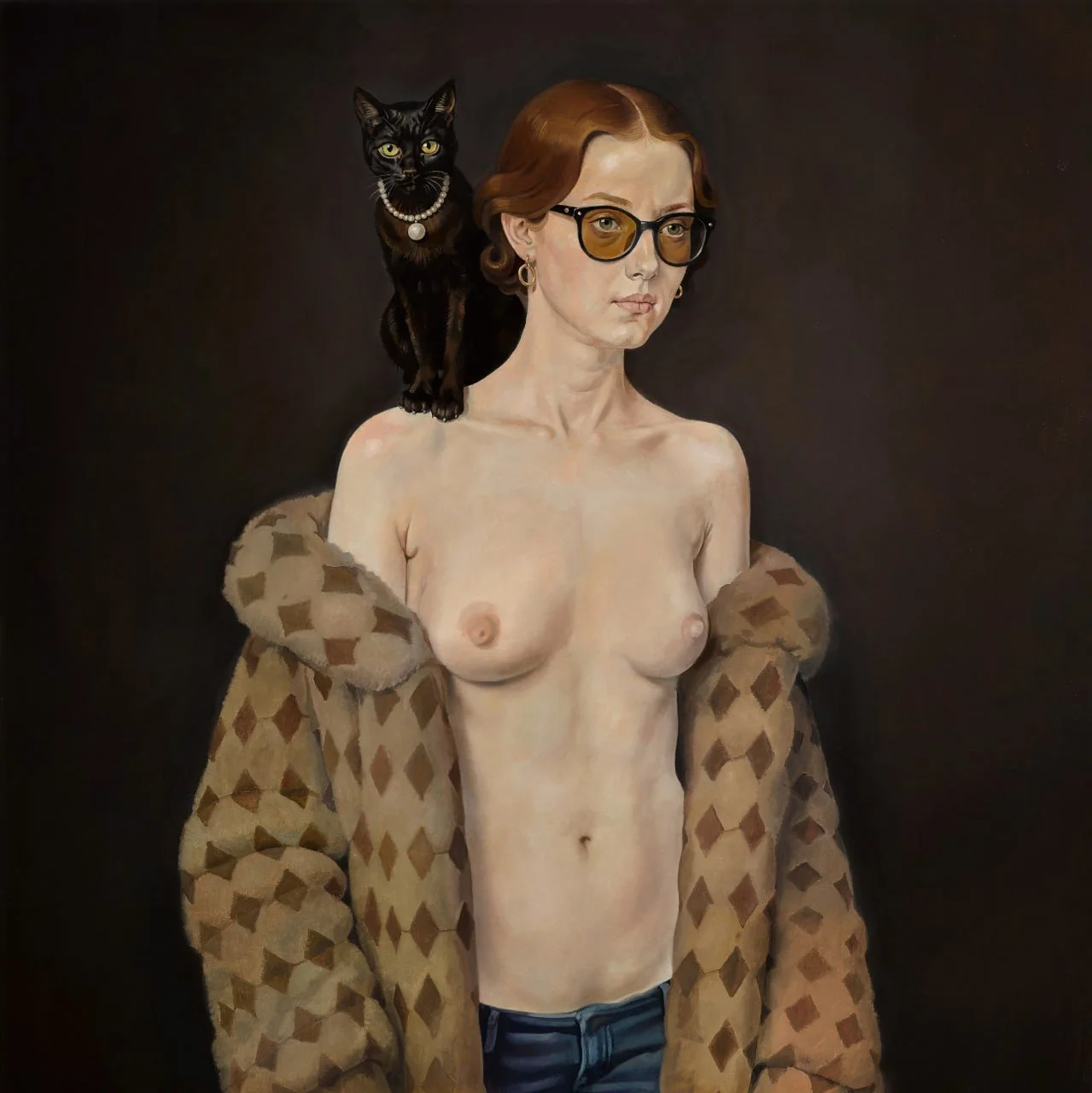
My process begins with generating concepts using open source software, specifically ComfyUI. I have trained numerous custom LoRA models on my own visual language, each slightly different, so they produce a spectrum of variations within a coherent aesthetic.
I generate many iterations and then isolate the visual outliers, images that resist categorisation or feel charged.
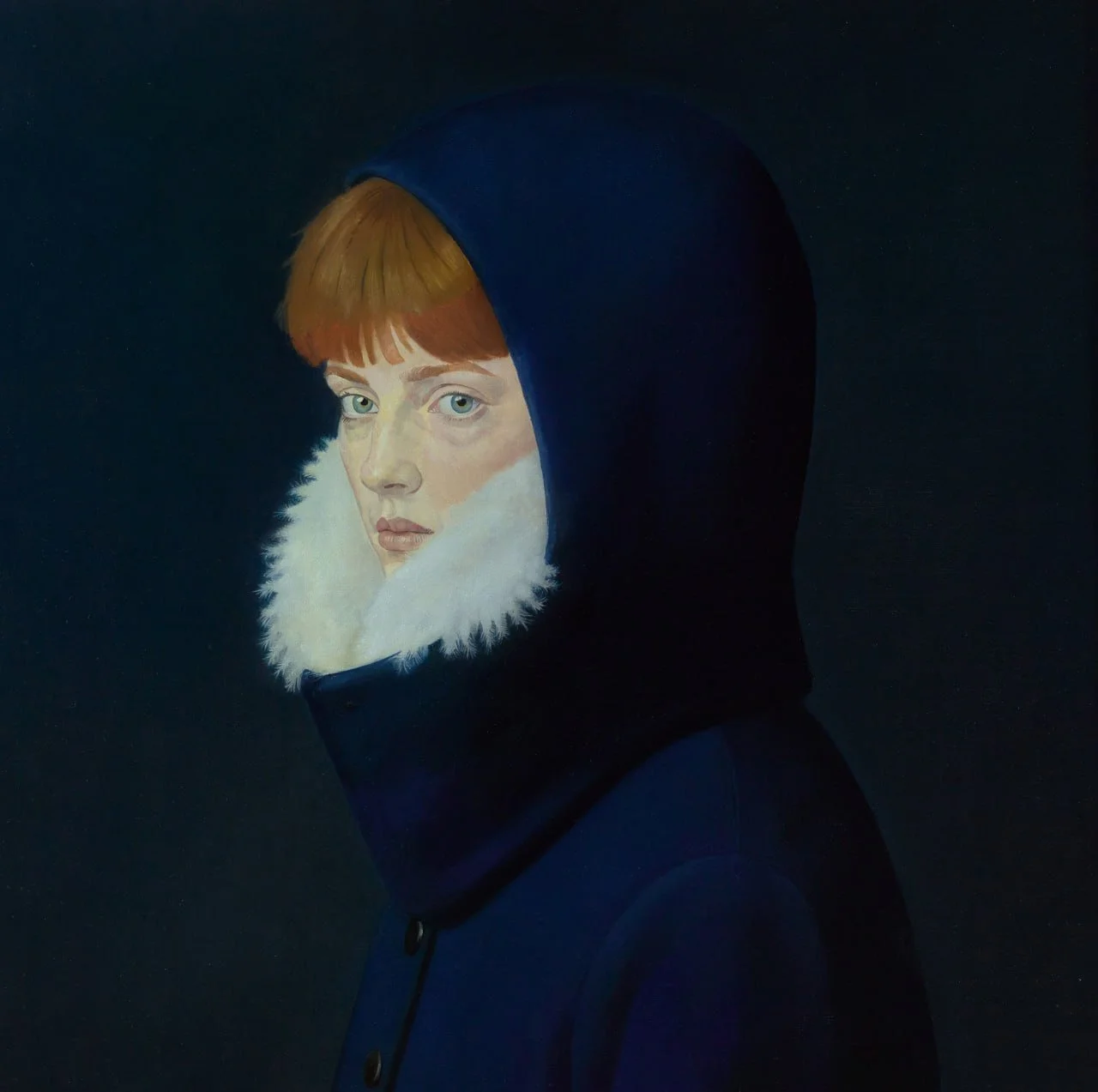
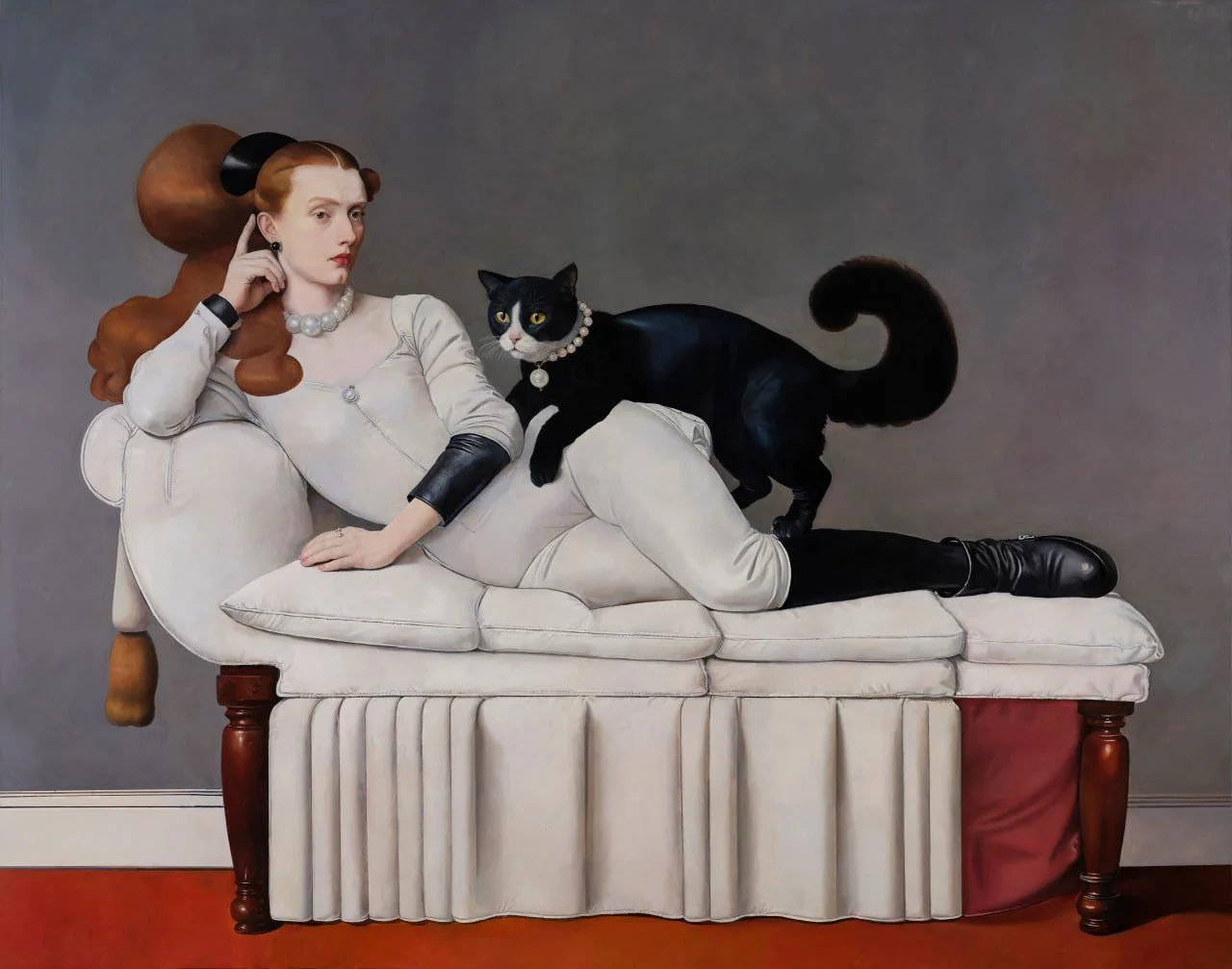
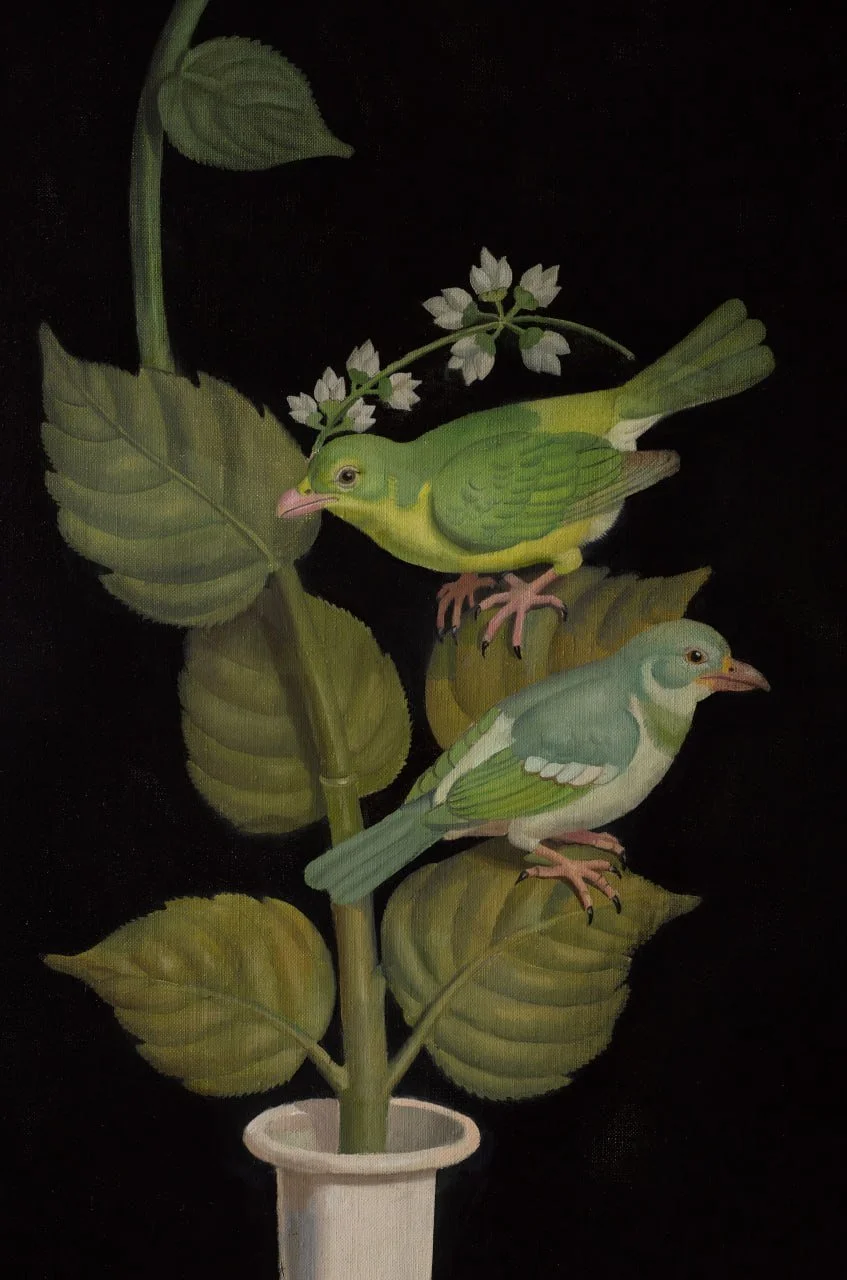
From there, I decide which works remain digital and which should be translated into oil. Painting becomes a form of reverse engineering, transferring a digital concept into traditional oil on canvas with precision.
Your background in philosophy suggests a deep engagement with questions of perception and meaning. How does this foundation influence the conceptual framework behind your visual language?
I am interested in thinkers like Wittgenstein, Feyerabend, Lakatos and Kuhn, figures who challenged linear models of knowledge and scientific progress. Their ideas resonate with how I approach art history and technology, as systems in perpetual flux. Not true in a progressive sense, but transformative. My work reflects that nonlinearity.
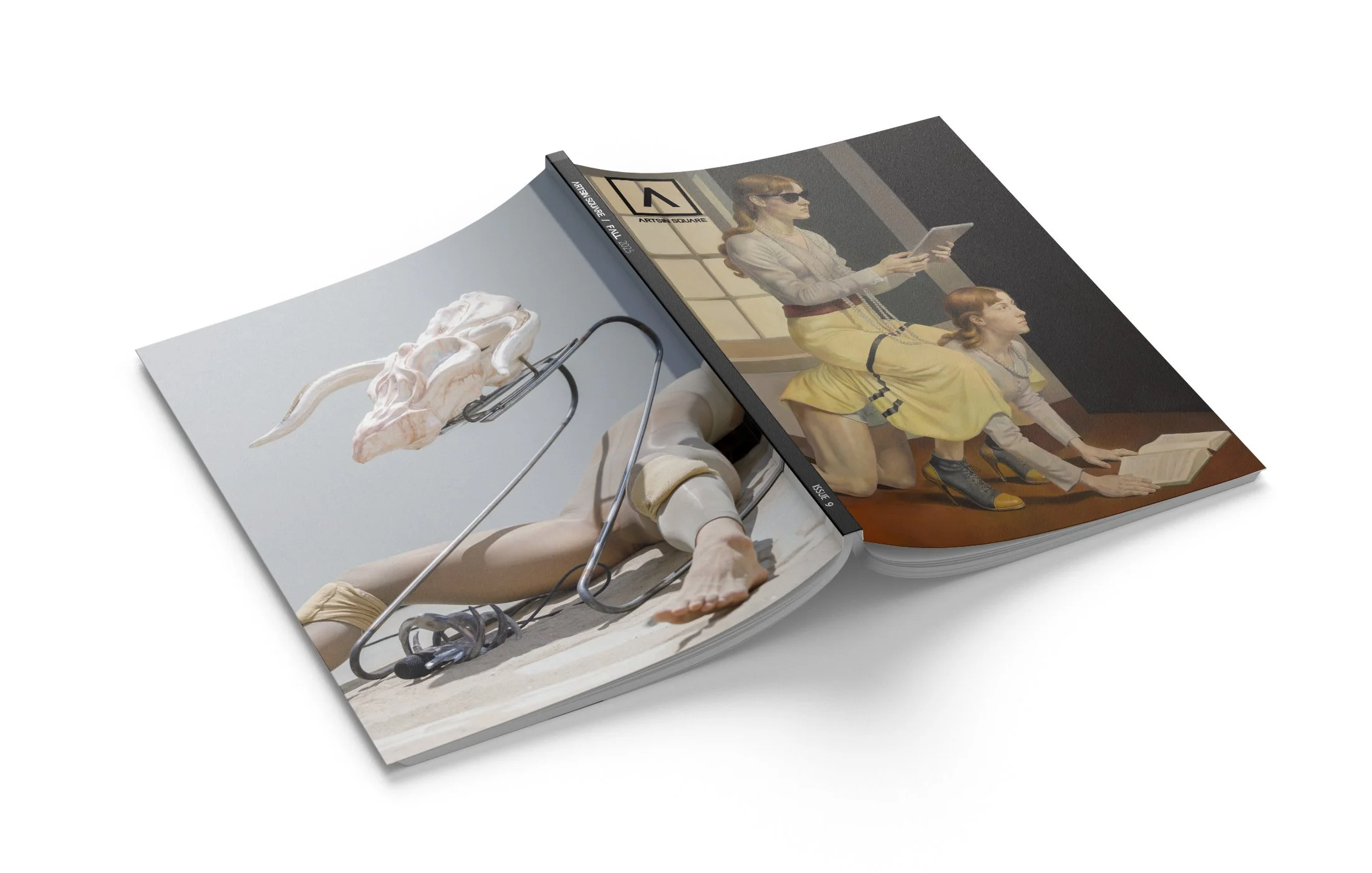
Von Wolfe works is featured on the cover of Issue 9 of Artsin Square magazine, and his interview is also included in this issue. Learn more
You work at the intersection of traditional oil painting and advanced diffusion-based systems. How do you negotiate authorship and intuition within a process partly guided by algorithmic generation?
I see AI as a co author or assistant. It can propose compositions and ideas, and it often surprises me, but what remains uniquely human is selection, the ability to steer, refine and choose direction.
The machine can generate infinite possibilities but it lacks discernment. Intuition lies in deciding what to keep, what to discard, and how to push an image toward ambiguity, emotion or tension.
Authorship becomes an orchestration rather than a solitary origin. And I am unconvinced by accelerationist fantasies of a post human machinic art. As Wittgenstein wrote, if a lion could speak, we could not understand it. An entirely alien aesthetic might be unintelligible to us.
When translating a digitally generated composition into oil, what remains constant and what transforms? Is there an aspect of unpredictability you deliberately preserve in the transition between the two mediums?
Almost everything remains constant. There is no hesitation, no blur, no bleed, and no expressive brushwork. I want the paintings to reflect our contemporary visual field, the screen, the scroll, the algorithmic sublime. This separates my approach from artists who foreground the flesh and gesture, like de Kooning or Schiele.
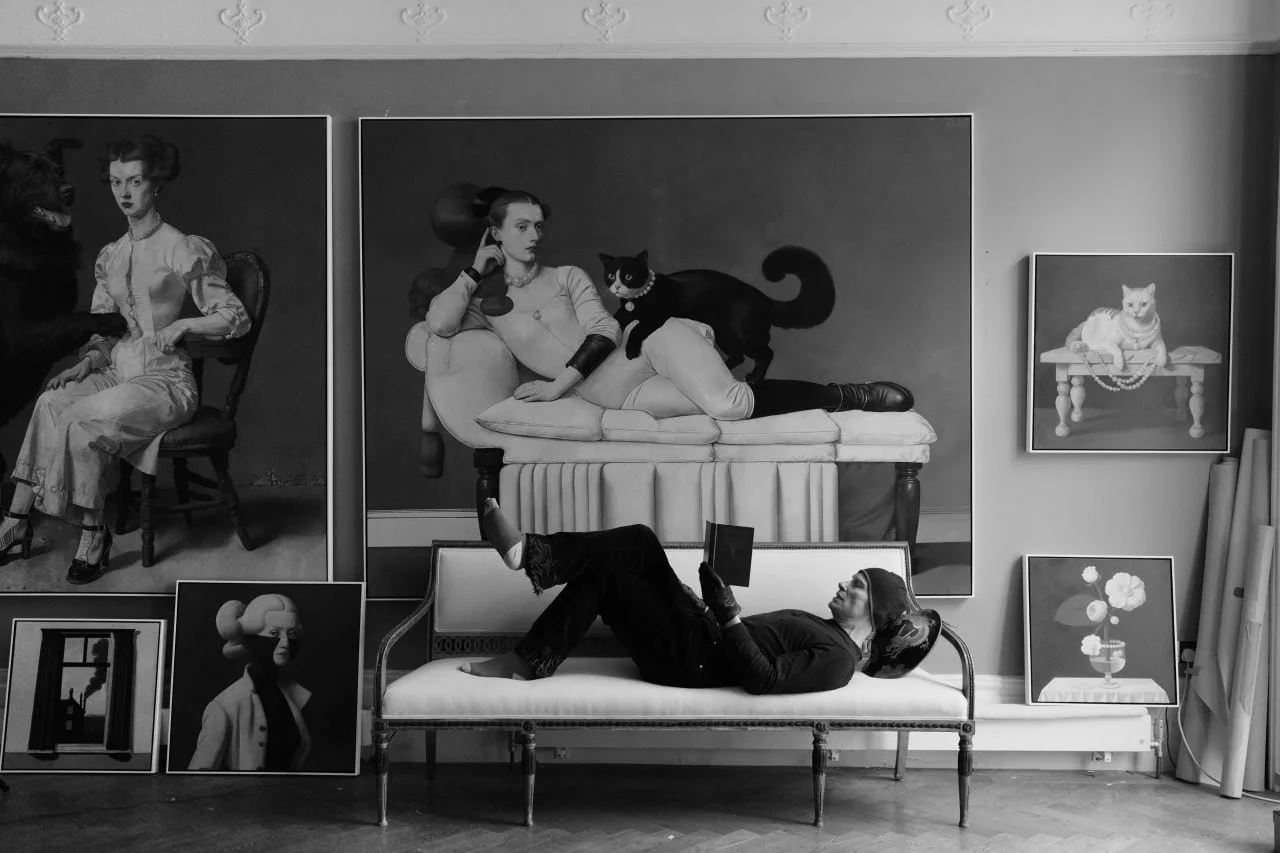
Von Wolfe studio 2025, photo credit Nick Knight
In your practice, the digital and tactile coexist without hierarchy. What drives your insistence on maintaining that balance rather than allowing one medium to dominate the other?
In a world of high speed image production, images created like high frequency trades, the most transgressive act is to slow down. Painting reinstates stillness and embodiment.
There is no hierarchy between digital and physical. The digital offers speed, multiplicity, infinite variation. The painting provides weight, presence and lineage.
The interesting space emerges between the two. To collapse one into the other would be reductive, oscillation is what generates new languages.
The precision and clarity in your images often verge on the uncanny. What role does imperfection—or human error—play in achieving emotional resonance within such technically exact works?
I do not engage with the nineteenth century romantic idea of error. I am not battling the canvas or searching for expressive strikes and reversals like Zola describes in The Masterpiece. My images arrive more like Michelangelo’s figures seen within the stone. I may iterate, but each iteration is a choice between fully formed archetypes rather than a struggle toward them.
As your work circulates among major museums and international audiences, how do questions of cultural identity and lineage—being of German and Polish descent yet British-based—inform the narratives within your paintings?
I do not think about identity at all. Perhaps because I am more drawn to what I do not know, what I have not yet seen. Once you map your coordinates, you are already trapped inside them.
I am content without identity. If, as Nietzsche said, God is dead, perhaps identity has died with Him. That is not a loss but a kind of exhilaration, like Drake climbing a tree in Panama and seeing two oceans at once.
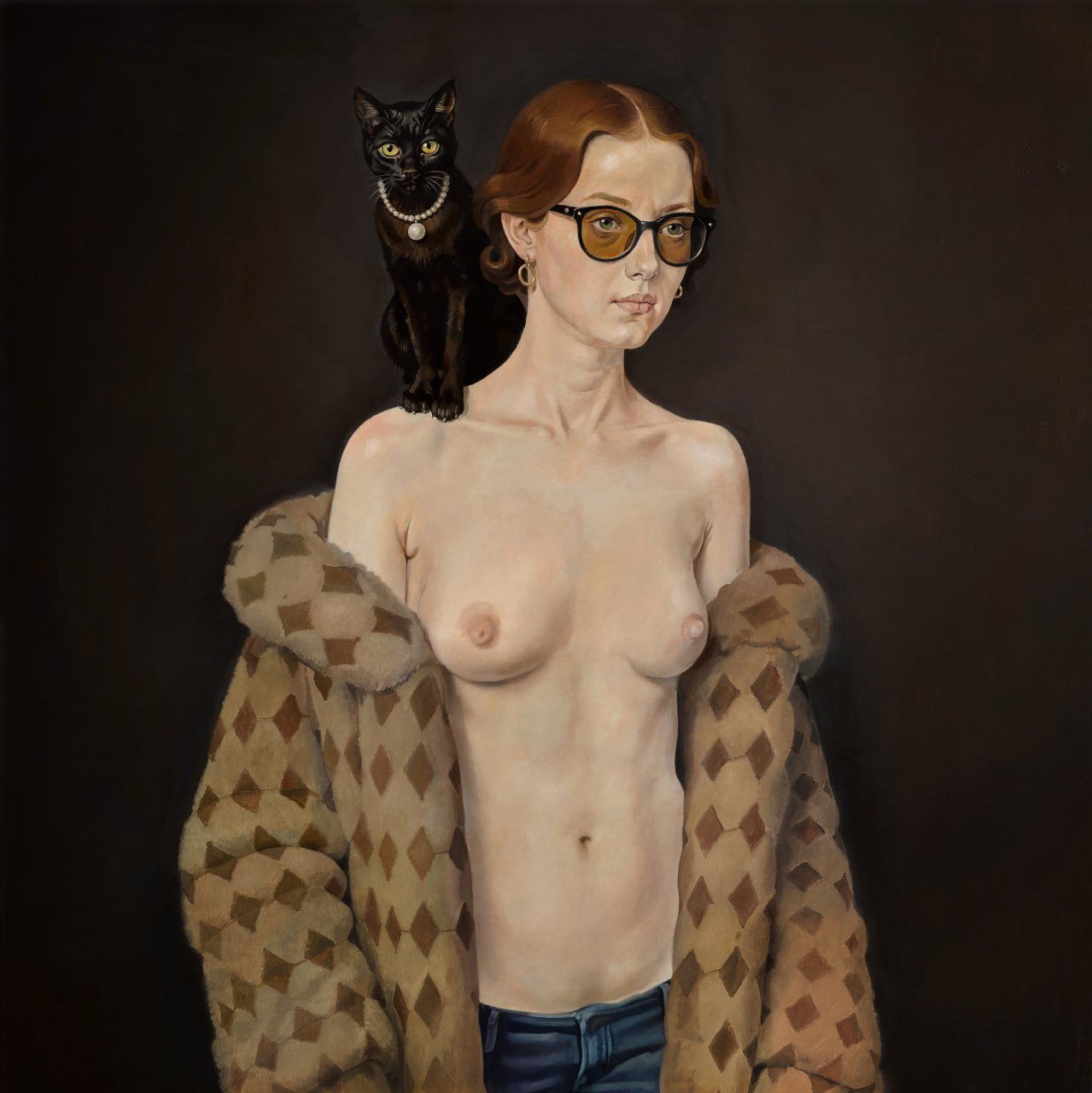
Many contemporary artists grapple with the expanding presence of AI in creative production. How do you differentiate between collaboration with technology and dependency on it?
We have always depended on frameworks, Euclid for geometry, Newton for physics. There is always a ground we walk upon.
AI is not a human collaborator, it does not argue, it is more like a silent hermit, powerful precisely because it does not speak. Like Father Zosima in The Brothers Karamazov, whose body decays in the coffin, flawed yet spiritually potent. Algorithms are immortal, without consciousness, and that can be freeing. They provide stability from which I can work.
Viewers frequently describe your works as simultaneously intimate and monumental. What strategies do you employ to sustain that tension between personal gesture and systemic precision?
There is no strategy. I simply respond to what emerges from the noise, much as a cave painter saw the bison in the contours of the wall.
Given that your practice reinterprets existing imagery through a new lens, how do you address the ethical or philosophical implications of re-use, authorship, and originality in a post-digital era?
Much like any artist, we look at art, and in the studio we respond. My studio is bilinear, one half screen, one half easel, and between the two I navigate ethics like anyone else.
Historically, libraries and knowledge systems, Cosimo de Medicis collection, Byzantine manuscripts, were themselves appropriated, repurposed and sometimes used as instruments of power. Ethical purity in data sets is a modern fiction, but we do our best to mitigate.
I work with my own data sets, built from my own images.
Looking ahead, do you envision your methodology evolving toward total digital immersion, or will the physicality of paint always remain central to how you think and feel through image-making?
Both paths will continue. There is no linear evolution, only flux.
Related Pages


Meet the Artist
Joe Hedges