Christian Rex van Minnen
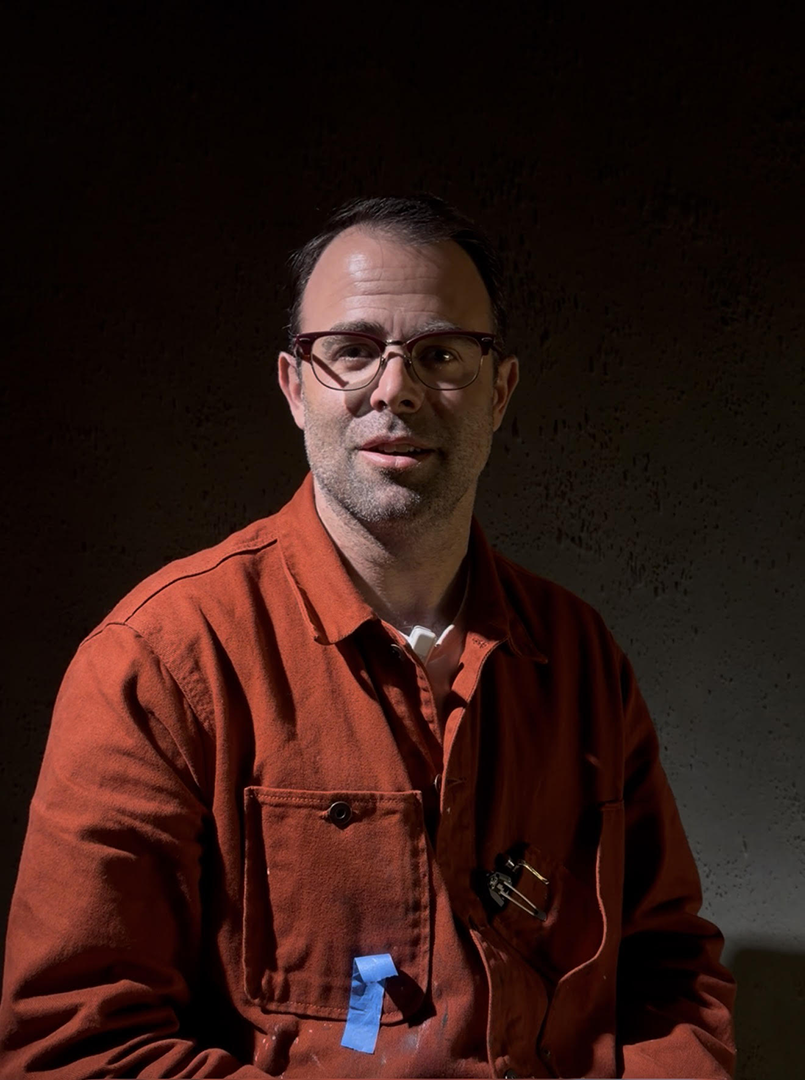
Von Wolfe is a British artist of German and Polish descent. He studied Philosophy at York University and currently lives and works in London. Von Wolfe’s process embodies the seamless interplay between the artist’s practice
as an oil painter and the forefront of technological innovation. Striking a balance between intuitive human discernment and a cutting-edge node-based system using diffusion models, the resulting works showcase astounding precision.
The artist navigates the boundary between digital and tactile realms. Through a process of adaptation and reinterpretation, he takes meticulously curated artworks, neither privileging the digital over the canvas nor vice versa, skilfully rendering them in oil, ensuring each medium stands in its own right, yet is harmoniously interconnected.
Achieving international recognition, his artwork has been showcased in esteemed art institutions globally. These include Musée Quai Branly, Paris, Helsinki’s Ateneum Museum, Stockholm’s National Museum and the Palais des Beaux-Arts de Lille..
Christian Rex van MinnenHi Christian, tell us about your background. How and when did you first start to paint?
I was born in Providence, RI, and grew up in Colorado. I was always a drawer, and had the good fortune of people encouraging me from the start. I had a great high school art teacher, Tish McFee, that introduced me to oil painting when I was 15. I attended Regis University in Denver where I received a BA. Regis is a small, Jesuit, Liberal Arts college and I received a great education there. Several years after graduating I discovered the Old Masters and became obsessed with trying to understand and employ their methods and techniques in realizing my surrealistic visions. That has been my journey over the last 20 years.
How do you begin to work? What is your process like?
I have always been, fundamentally, a surrealist. I like to make it up as I go, preferencing the physically act of making marks and allowing those marks to become ‘something’. The Old Masters techniques really makes the end result very illusionistic and believable, which I like. For me, the whole point is not knowing what’s going to happen, its a very organic and revelatory process.
Your paintings exist in a space between attraction and discomfort, beauty and grotesque. What initially drew you toward this visual language, and how has your relationship to it evolved over the years?
It’s not really my goal to make something with those qualities, but rather a consequence of the painting process, making something out of a mess of brush strokes, it ends up looking very grotesque. So its a chicken and an egg kind of situation, where the result is kind of wild, both beautiful and repulsive, and Ive spent a lot of time wondering why that is, justifying it to other people, etc. But to me it just looks like life, which is both beautiful and repulsive. I am often surprised that people dont see it that way, like, what does life look like to you? Is it not also grotesque?
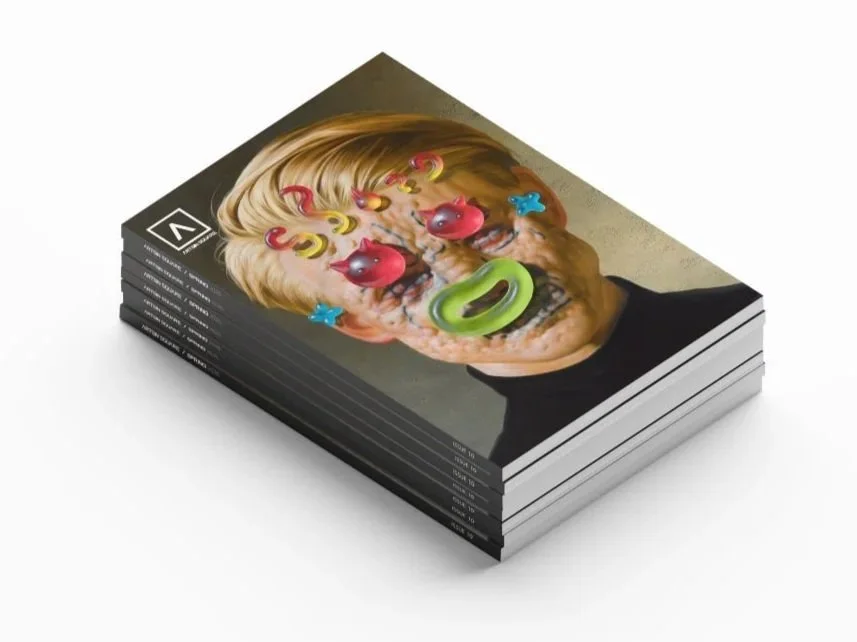
Von Wolfe works is featured on the cover of Issue 9 of Artsin Square magazine, and his interview is also included in this issue. Learn more
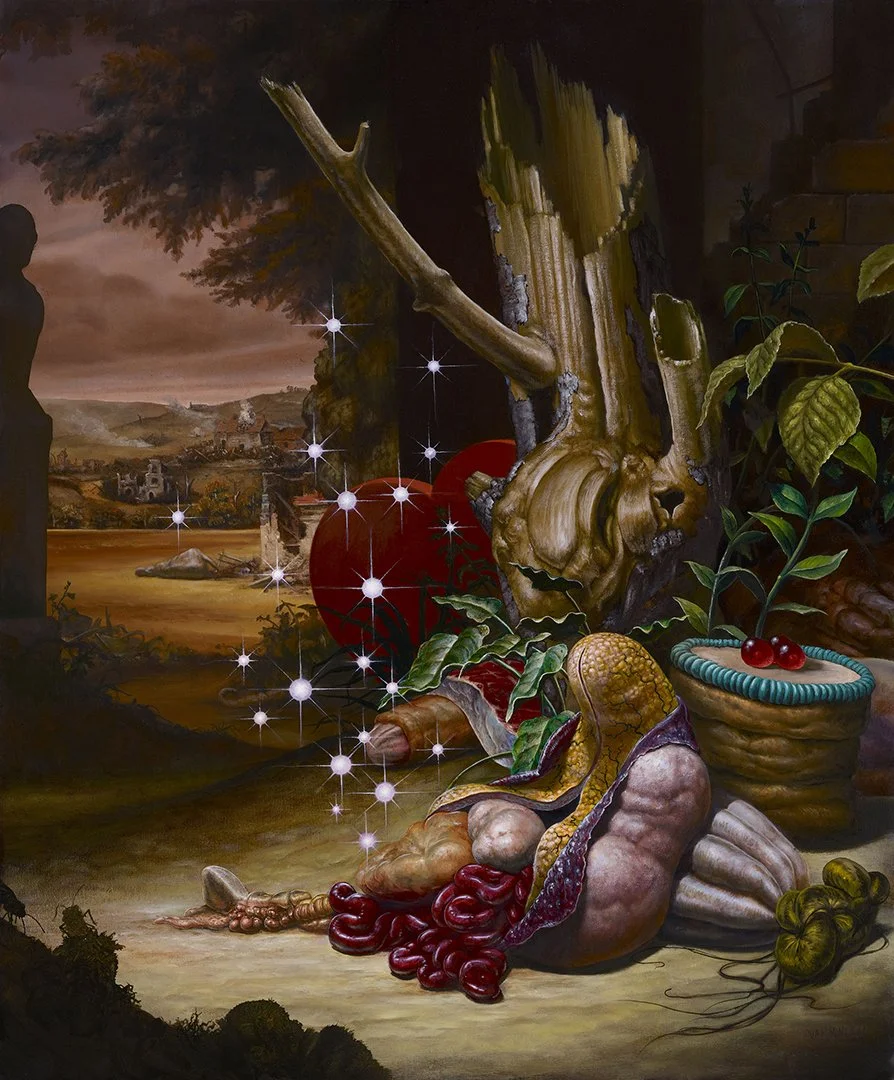
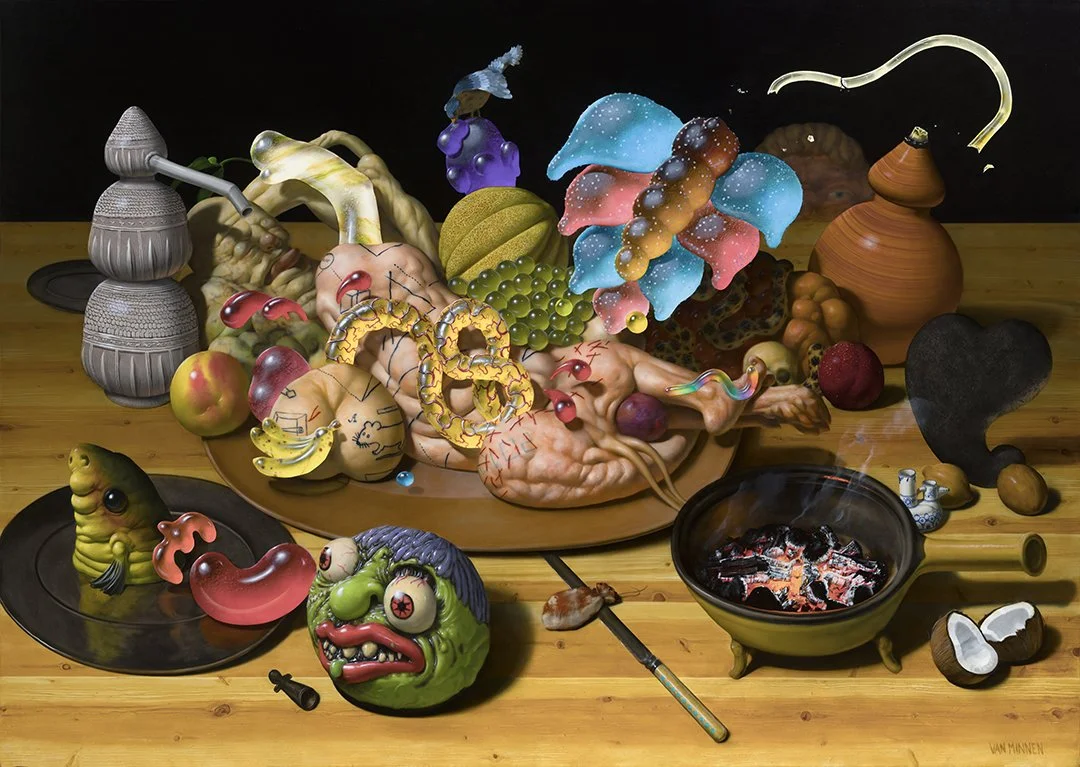
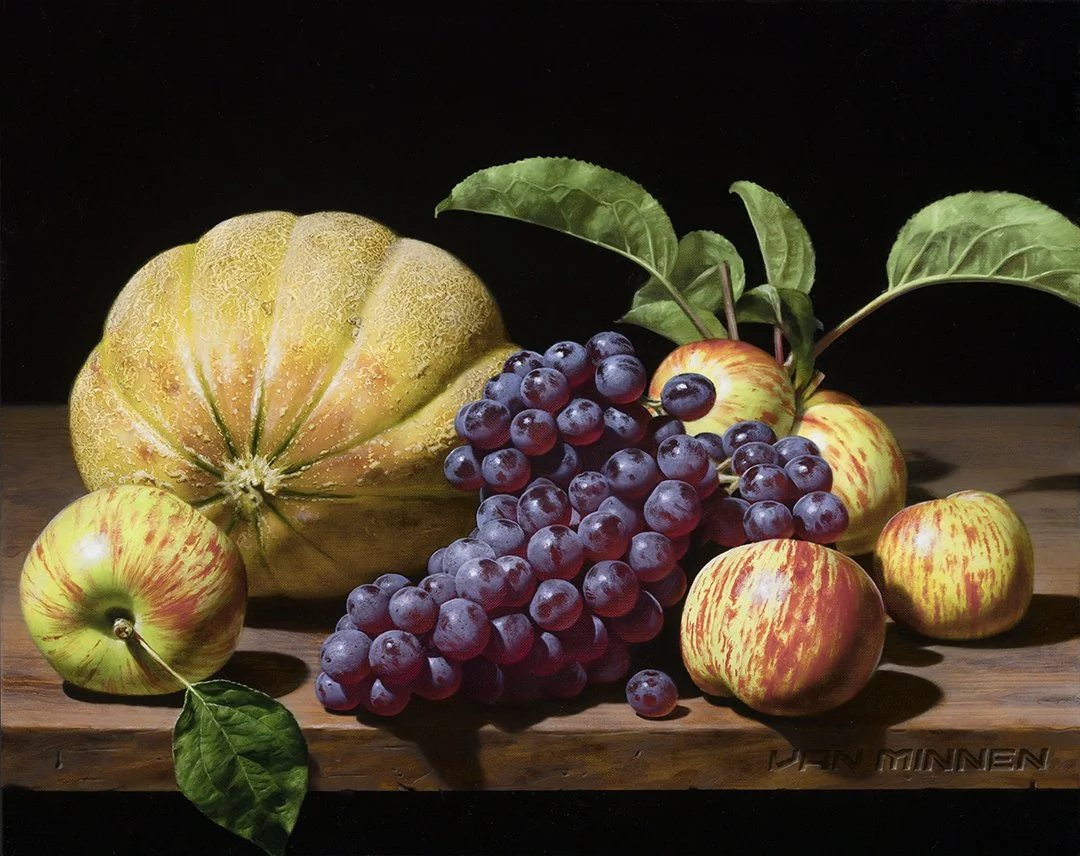
Many viewers immediately connect your work to Dutch Golden Age painting and the tradition of vanitas. What continues to inspire you about historical painting, and how do you reinterpret those references within a contemporary context?
I love books, thats how I learned everything, so it all comes to me out of order, out of context, organically. And I am much more interested in the formal qualities of these works than their meaning, context etc, at least until much later. What I see in these works, that span hundreds of years and many schools across Europe, is a conversation in picture and design among artists over generations. Context is kind of draped, or glazed, over the top. So that is primarily what I have taken and used in my own way, is that thread of design and trickery that runs throughout this history.
Your works often feel simultaneously humorous, unsettling, and deeply psychological. How important is emotional contradiction within your practice?
I guess I would have to push back on the idea that there is contradiction. Again, do you really experience life in that compartmentalized way? Homogeneous siloed experiences, linked one after another through time? Or is it all mixed up, messy, impossible to parse out? My experience has been the latter, it is just the truth of being human, any one saying otherwise is trying to sell you something.
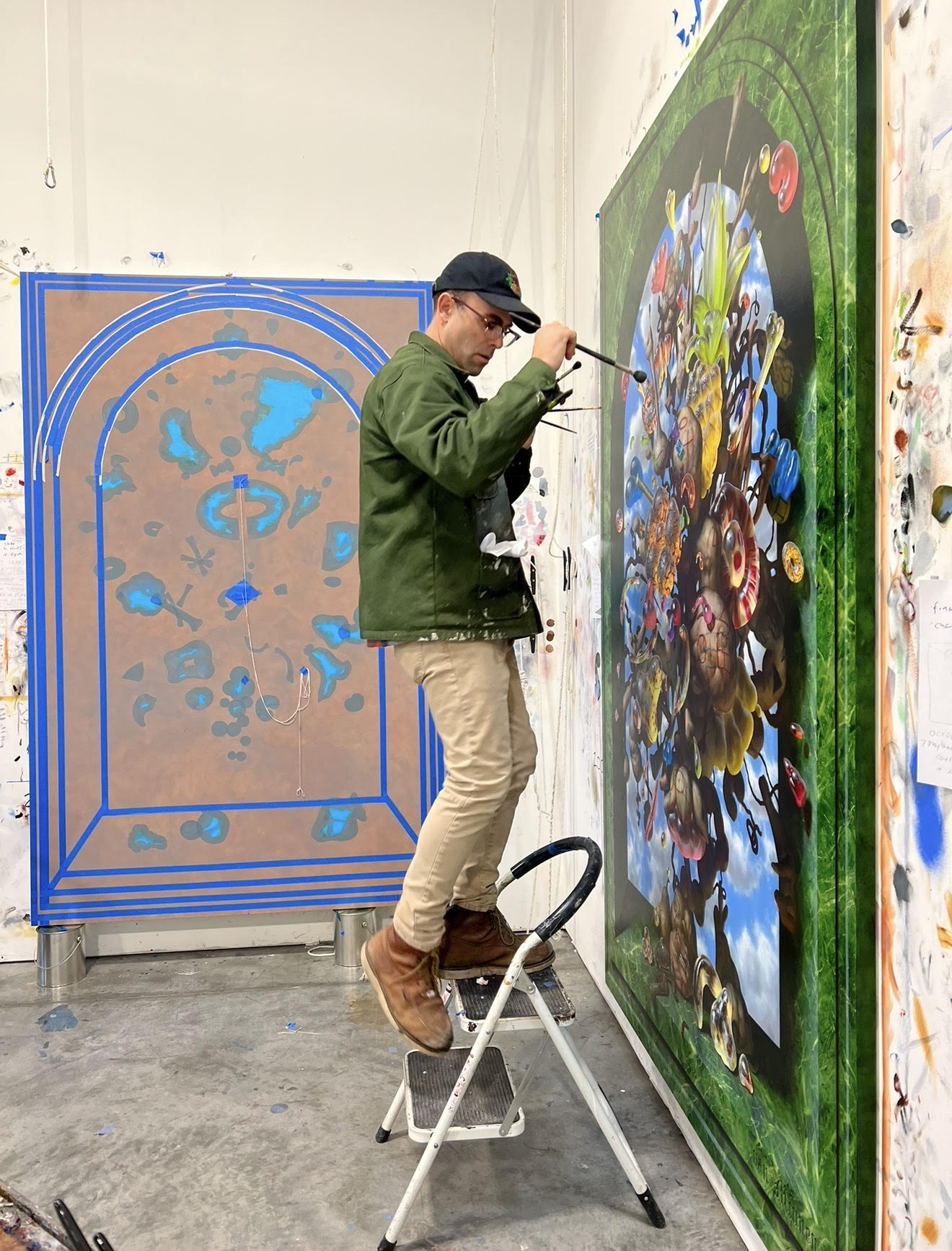
Christian Rex van Minnen at his studio
The figures in your paintings frequently appear fragmented, mutated, or transformed. Do you see these distortions as reflections of contemporary culture, inner psychological states, or something more intuitive?
I think those are all acceptable interpretations, but they come after the fact. The process is the goal, not a narrative or idea that is executed. Sometimes Im interpreting and making ‘sense’ of a thing while its happening but at the root, these things are emerging from ambiguity and are free of context, like rock formations that look like faces, pareidolia happens but doesn't make the rock a face, its just a rock.
Despite the surreal and chaotic imagery, your technical approach to oil painting is incredibly disciplined and refined. How do you balance spontaneity with precision during your process?
Great question. The method I use involves a division of labor, a process of layering. The birth of the forms comes from that automatic drawing process in the imprimatura or grisaille layer, and it is kind of locked in at that point. Then its just a matter of giving it color and texture through the later layers, there’s really no changing it from those first marks and forms and there’s some sense of acceptance of it and then trying to make it look good, make it believable, create an effect then would ask me and the viewer for some empathy, or suspension of disbelief. Its polishing a turd sometimes. That doesnt really speak well of my intellect or judgement lol but its the truth- anything is going to look good when done in this method.
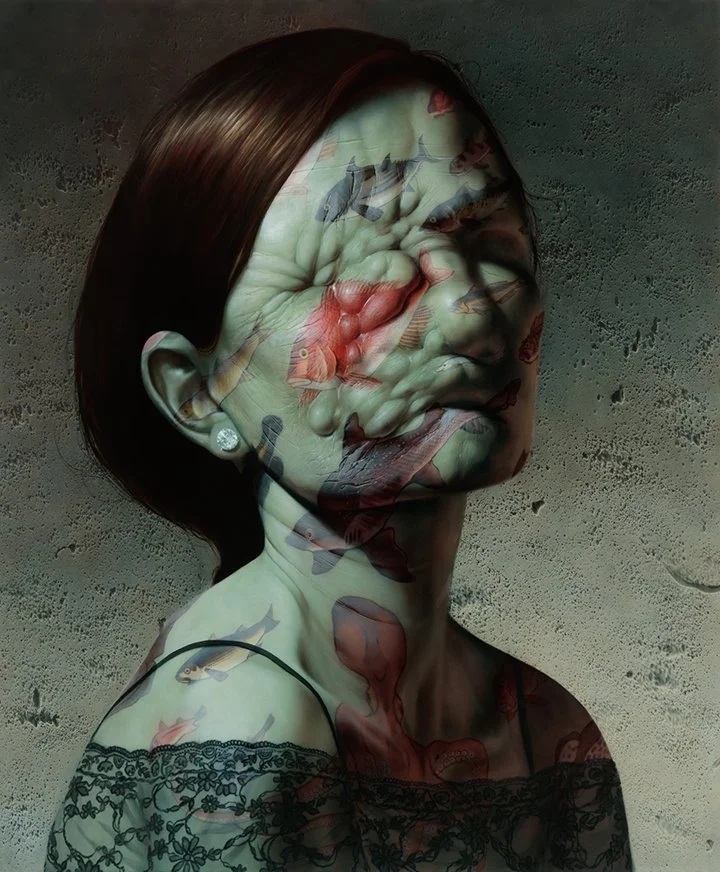
Your paintings contain recurring motifs — candies, tattoos, flowers, wounds, organic textures — that seem to reappear across different bodies of work. Do these elements function symbolically for you, or are they more instinctive visual vocabularies that continue to evolve over time?
Probably the latter. I’m not so sure I would call them symbolic in a didactic, ‘this equals this’ kind of way. But maybe that the portrait, its design constraints, are the main symbol, like, ‘this structure equals portrait’. I think the symbol of still life is maybe less rigid.
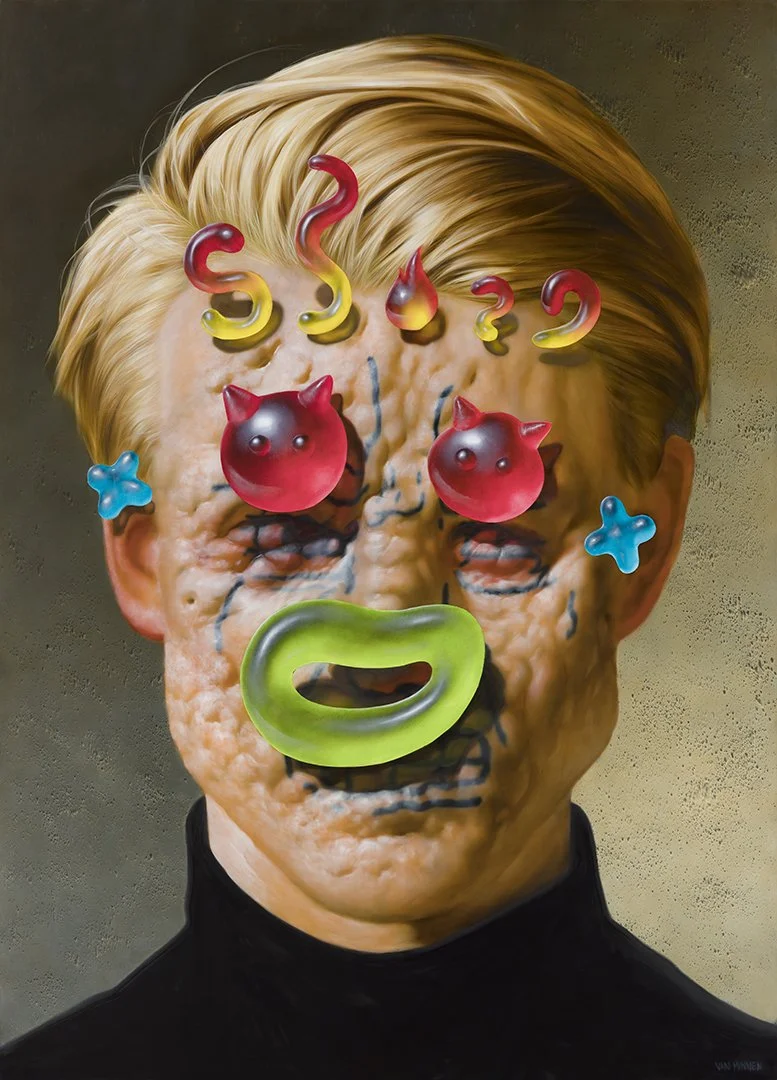
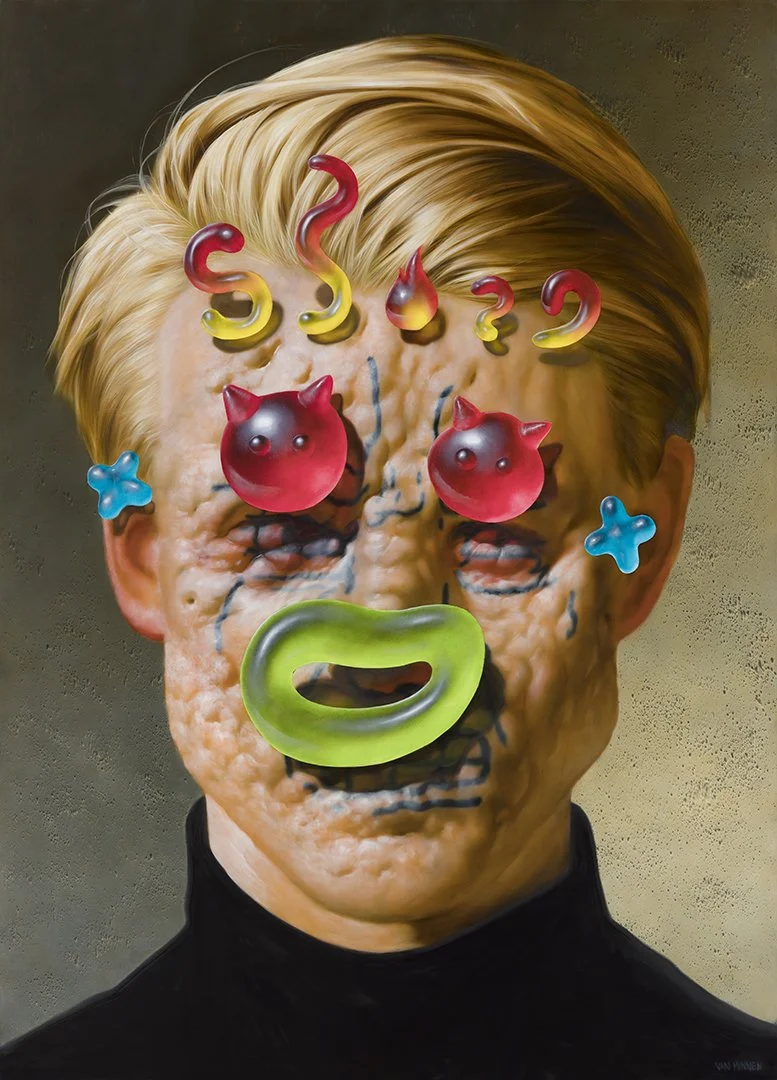
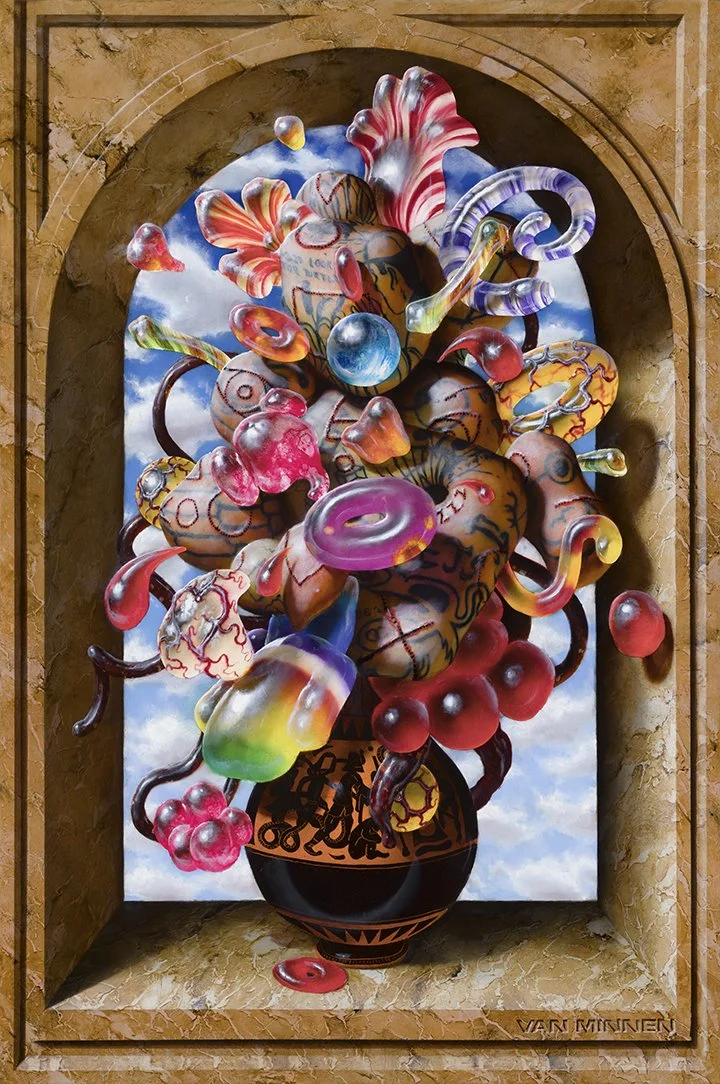
Rage Quit, 2022, H72 x W52, Oil on Linen
Humor appears throughout your work in subtle and unexpected ways. What role does absurdity play in helping you approach darker or more difficult subject matter?
Its just the truth. Reality is absurd. Not meaningless, but completely bonkers, bananas, absurd. So again, its not a strategy that is deployed in pursuit of a goal, but a truth that is revealed. I’m sorry to pick apart your language but I just experience it all very differently. I’m not ‘approaching’ dark subject matter but rather swimming in it, breathing it, right next to you. You make it sound like i’m journeying to some far off dark land and reporting back but, artist or not, just as a man, I can say that we are enveloped in darkness. This world is shrouded in a deep gloom. I am looking for the light in it all.
In recent years, contemporary painting has become increasingly image-saturated through social media and digital culture. How has living within this constant flow of imagery affected the way you think about painting today?
To paraphrase my friend Colleen Barry, the iconoclasm of today is not the destruction of images but the deluge of slop, the drowning of the real. Why do we want to destroy ourselves, our humanity? I’m not going to go along with that. I believe in the soul, that art can convey it, and digital technologies are not further enabling that miracle, but actively seeking to destroy it. Take from that what you want.
Describe a real-life situation that inspired you.
I lived in Mexico City back in 2008-9, and spent a lot of time in the markets there. I really liked how it is so visually intense, with everything everywhere all the time kind of maximalist aesthetic.
Finally, what advice would you give to younger painters trying to develop a visual language that feels both personal and distinct within today’s contemporary art landscape?
I would focus solely on the first part of that, and as quickly and thoroughly as possible dispose of the last part of that. You are completely unique, and its a great gift given to the artist to reveal that truth. Resist the temptation to appeal to another’s ideas of what good art is, it is almost always a bitter cup of cope and contempt. Nosce te ipsum!
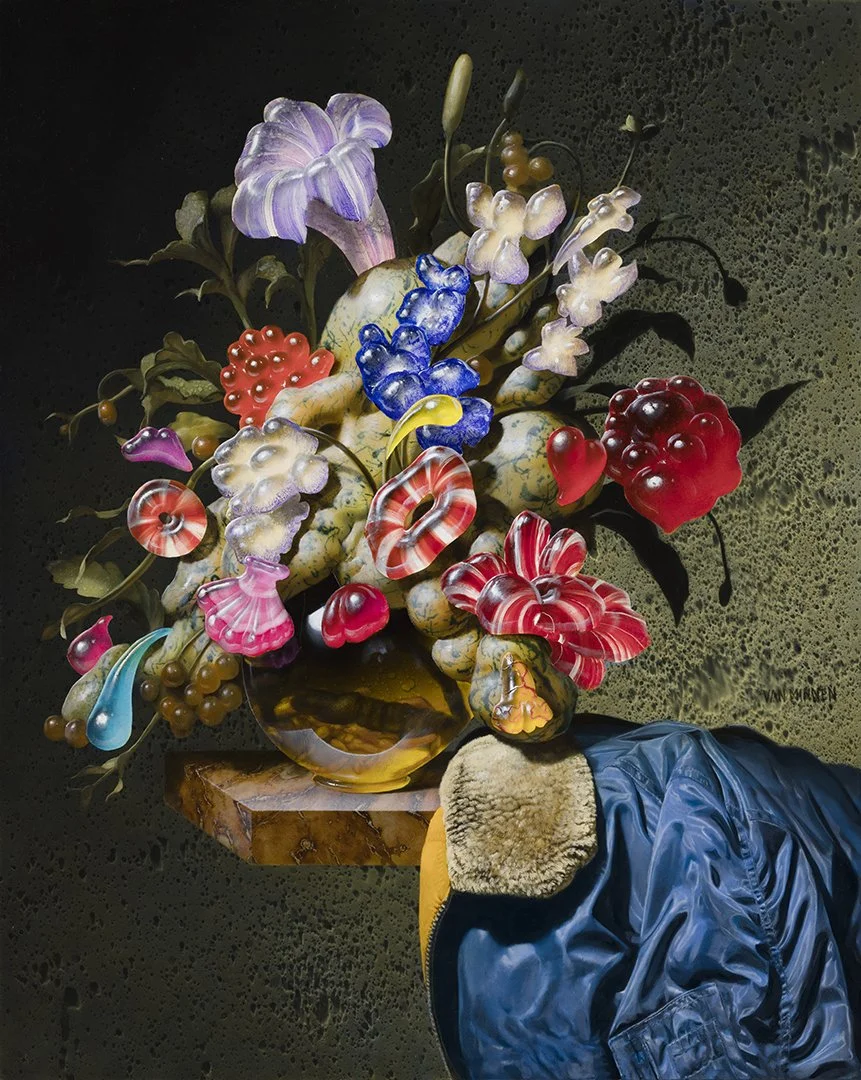
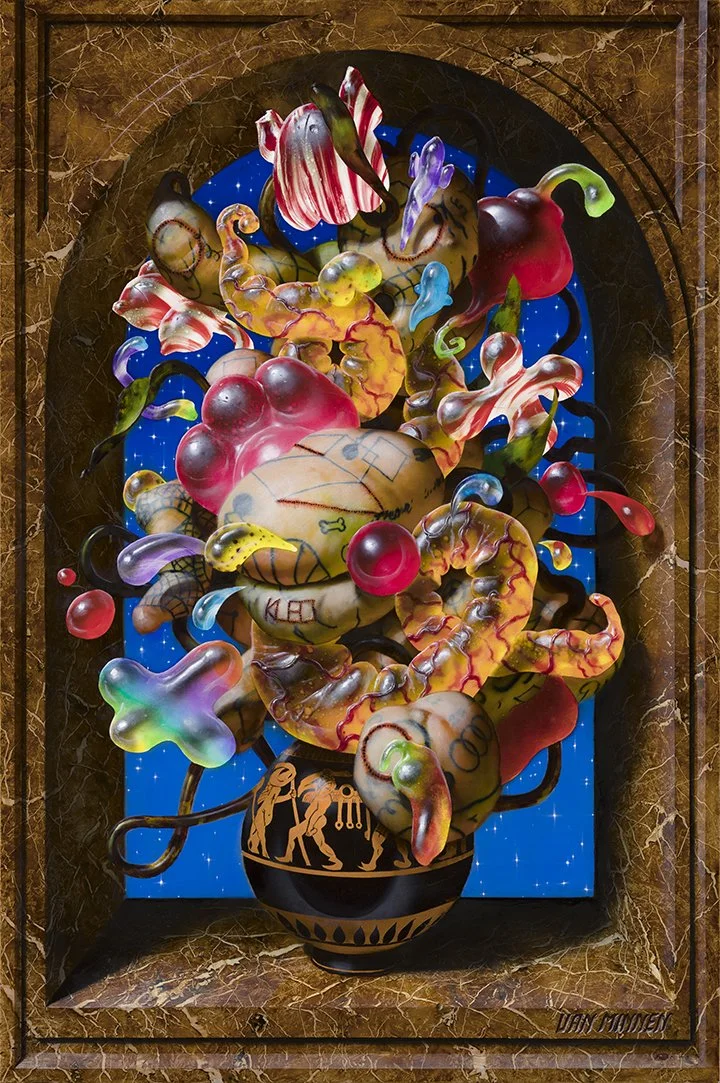
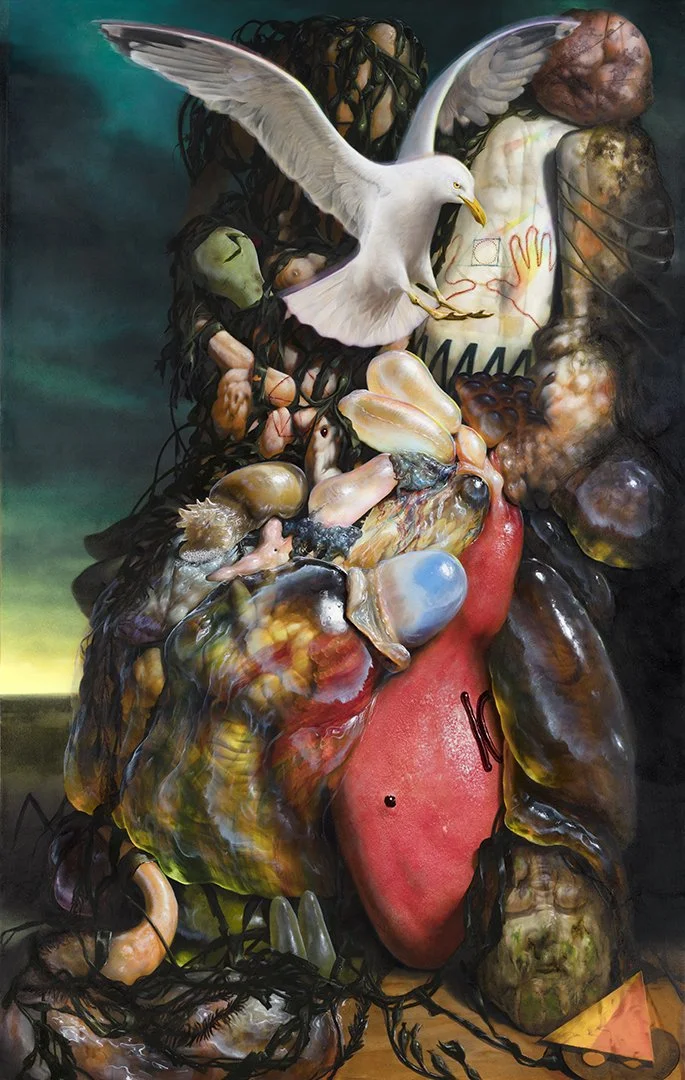
Metabolic Still Life with Butterfly and Blue Bomber Jacket, 2025, H62 x W42, Oil on Linen

Related Pages


Meet the Artist
Joe Hedges